

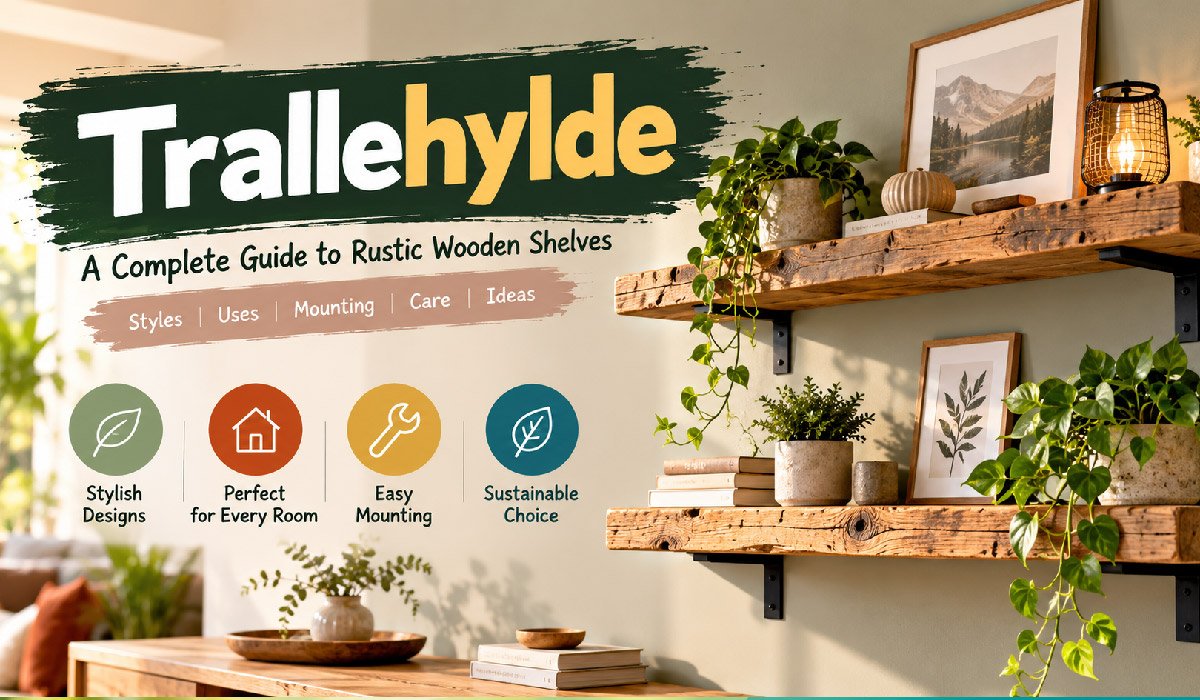
A Trallehylde is more than a simple wooden shelf. It is a practical piece of home furniture that combines natural wood, useful storage, and a rustic appearance. Many designs are connected with reused scaffold boards or timber that keeps visible grain, marks, color changes, and signs of earlier use.
This type of shelf fits especially well in Scandinavian, Nordic, rustic, minimalist, and industrial interiors. It can be used for books, plants, kitchen items, photographs, decorations, and everyday storage.
What makes a Trallehylde interesting is its character. Instead of trying to make every board look completely perfect, the design often allows the natural surface of the wood to remain visible. This guide explains what Trallehylde means, its materials, common styles, mounting choices, room uses, maintenance, and important buying considerations.
What Is a Trallehylde?
A Trallehylde is a wooden shelf commonly associated with scaffold-board-style timber, reclaimed wood, or slatted wooden construction. Some versions are made from boards that have previously been used, while others are produced from new timber but follow a similar rustic design.
The main attraction is the appearance of the material. Reclaimed boards may have small cracks, knots, darker areas, worn edges, and differences in texture. These details can make every shelf look slightly different.
A Trallehylde can be decorative, but it is also functional. Depending on its dimensions and mounting system, it can hold books, jars, dishes, framed pictures, plants, office supplies, and many other household objects.
Its simple shape also makes it flexible. The same basic shelf can look traditional, modern, industrial, or Scandinavian depending on the wood finish and supports used.
What Does Trallehylde Mean?
Trallehylde is a Danish term connected with wooden shelving and tralle-style construction. A tralle traditionally refers to a long wooden platform or structure made from connected pieces of timber. Similar wooden materials have been used for scaffolding and other practical purposes.
When this style of timber is transformed into shelving, the result is commonly described as a Trallehylde.
However, not every shelf sold under this idea will be identical. Some products use genuine reclaimed boards, while others use fresh oak or other timber designed with a similar appearance.
For this reason, buyers should check the product description instead of assuming every Trallehylde comes from an old construction site.
The Story Behind Reclaimed Scaffold Wood
Scaffold boards were designed for practical construction work. Their purpose required timber that could handle regular use. Once these boards were no longer needed for their original job, usable pieces could be cleaned and turned into other products.
Furniture makers and DIY enthusiasts found that old boards could work well for shelves, benches, tables, and decorative pieces.
Instead of completely removing every sign of previous use, some makers keep selected marks in the timber. The boards may still be sanded, cleaned, and treated, but part of their older character remains visible.
This approach helped reclaimed wood become attractive for interiors where people wanted something less uniform than factory-made furniture.
What Makes Trallehylde Different From a Normal Shelf?
The biggest difference is usually appearance.
A conventional shelf may be designed to have a smooth, even surface. Its color, edges, and texture can be highly consistent from one piece to another.
A reclaimed Trallehylde is often less uniform. One section may be darker than another. Grain may be more visible. Knots, minor surface marks, and signs of age can become part of the design.
This does not mean that every imperfection is desirable. Structural cracks, weak joints, heavy warping, or unsafe surfaces are different from harmless rustic character.
The appeal comes from controlled irregularity. The shelf should still be useful and safe while looking natural and individual.
Materials Commonly Used for Trallehylde
Reclaimed scaffold timber is one of the materials most closely connected with this shelf style. It offers visible texture and signs of previous use.
Solid oak can also be used. Oak provides a natural appearance while allowing manufacturers to create a cleaner and more refined version of the design.
Other solid woods or reused construction timber may also be suitable depending on the shelf maker.
The complete shelf can include more than wood. Black metal brackets, steel supports, hidden hardware, leather straps, hooks, or dark spacers may be added.
These supporting materials can strongly influence the final style. Wood with black metal tends to look more industrial, while wood with leather straps can feel softer and warmer.
Different Types of Trallehylde Designs
There is no single Trallehylde design. Shelves can differ in width, depth, construction, surface treatment, and mounting method.
A classic scaffold-board shelf usually uses a thick wooden board with a clearly visible rustic surface.
A slatted design uses several narrow wooden sections rather than one continuous board. Small spaces or dark spacers may separate the pieces.
Picture ledges are narrower and are mainly designed for artwork, framed photos, books, and small decorative objects.
Floating versions hide much of the mounting hardware, creating the appearance that the shelf comes directly out of the wall.
There are also Trallehylde designs with hooks underneath. These are useful in hallways, kitchens, or utility areas where both shelf storage and hanging space are needed.
Why Trallehylde Works Well in Scandinavian Interiors
Scandinavian interiors are often built around practical furniture, simple forms, natural-looking materials, and uncluttered spaces.
A Trallehylde fits these ideas well.
Natural timber can add warmth to a room with white, beige, gray, or cream walls. The wood introduces texture without requiring complicated decoration.
It can also provide useful storage without taking up floor space. This is especially helpful in smaller apartments where large cabinets can make rooms feel crowded.
The shelf does not need to dominate the room. A simple wooden board holding a few books, a plant, and a photograph can create a complete display.
Other Interior Styles That Suit Trallehylde
Although Trallehylde is strongly connected with Scandinavian and Nordic design, it can work in several other interiors.
In an industrial room, reclaimed wood can be combined with black metal brackets, brick, concrete, or darker finishes.
In a farmhouse interior, natural timber can sit beside soft fabrics, ceramics, baskets, and warm neutral colors.
Minimalist homes can use floating wooden shelves to add storage while keeping visible hardware to a minimum.
Modern rustic interiors can combine old-looking timber with contemporary furniture and clean surfaces.
The shelf therefore changes character depending on the materials around it.
Using Trallehylde in the Living Room
The living room is one of the easiest places to use a Trallehylde.
It can hold books, framed photographs, candles, plants, ceramics, and small pieces of artwork. A shelf may be installed above a cabinet, beside a television area, or close to a reading corner.
The wood itself should remain part of the design. Filling every centimeter with decorations can hide the grain and texture that make the shelf interesting.
A better approach is to combine objects of different heights and leave some open space between them.
Several shelves can also be arranged on one wall if the mounting system and wall construction allow it.
Using Trallehylde in the Kitchen
A wooden shelf can make kitchen storage feel more open and accessible.
A Trallehylde can hold mugs, small bowls, spice containers, coffee supplies, cookbooks, or decorative jars. Frequently used items can stay within easy reach.
Natural wood also creates a useful contrast with tile, painted cabinets, stone countertops, and metal appliances.
However, kitchens contain steam, grease, heat, and moisture. The shelf should therefore have a suitable finish and should not be installed in a location where untreated wood is regularly exposed to water or intense heat.
Cleaning should also match the type of finish used on the timber.
Using Trallehylde in the Bedroom
A smaller Trallehylde can provide useful storage in a bedroom without requiring another large piece of furniture.
It can hold books, a small clock, framed photos, decorative pieces, or personal items.
A narrow shelf can also work as a simple display above a dresser.
When shelves are installed above beds, mounting becomes especially important. The wall, brackets, anchors, and load should all be suitable for the installation.
Decorative appearance should never be more important than secure fitting.
Using Trallehylde in the Bathroom
Wood can soften the appearance of bathrooms that contain large amounts of tile, glass, stone, and metal.
A Trallehylde may provide space for towels, closed containers, baskets, or decorative bathroom accessories.
However, bathrooms have higher humidity than many other areas of the home. Not every reclaimed wooden shelf is designed for this environment.
The timber needs a suitable finish, and good ventilation is important. Direct and repeated water exposure should generally be avoided unless the product is specifically designed for it.
Checking the manufacturer’s recommendations is the safest option.
Using Trallehylde in a Home Office
Home offices often need extra storage without reducing desk space.
A wall-mounted Trallehylde can hold books, notebooks, stationery, document boxes, and decorative items.
It also introduces a natural material into a room that may otherwise contain computers, screens, cables, and manufactured surfaces.
Frequently used objects can be kept close to the desk, while decorative items can make the workspace feel more personal.
Keeping the arrangement simple can prevent the office from looking cluttered.
Trallehylde for Hallways and Entryways
Hallways often have limited floor space, making wall storage especially useful.
A narrow Trallehylde can provide a place for keys, small storage baskets, decorative trays, or everyday accessories.
A shelf with hooks underneath can hold coats, hats, or bags.
This combination is practical because it puts several everyday items in one organized area.
For narrow hallways, shelf depth matters. A shelf that projects too far from the wall may interfere with movement, so measurements should always be taken before buying.
Trallehylde Mounting Options
The mounting system affects both appearance and safety.
Leather straps create a softer and more decorative look. They work particularly well with natural timber and relaxed Scandinavian interiors.
Hidden brackets create a floating appearance. Much of the supporting hardware is concealed, allowing the wood itself to become the main visual feature.
Visible metal brackets create a stronger industrial style. Black steel, raw metal, or similar finishes can look especially attractive with reclaimed boards.
Whichever system is used, it must be suitable for the shelf, wall, and intended load.
How to Choose the Right Trallehylde
Start with the room where the shelf will be installed.
Measure the available width and consider how far the shelf can safely project from the wall. Check nearby doors, windows, furniture, and walking areas.
Next, think about what you want to place on the shelf. A small photo display has very different requirements from a shelf full of books.
Look carefully at the timber. Rustic marks can be attractive, but major structural damage, unstable joints, sharp splinters, or excessive warping should not be ignored.
Also consider the finish. An untreated board may offer a very natural appearance, while oil, stain, paint, or another coating can change both appearance and maintenance needs.
Finally, check the mounting system and stated load capacity.
How Much Weight Can a Trallehylde Hold?
There is no single weight limit that applies to every Trallehylde.
Load capacity depends on several factors, including shelf thickness, shelf length, number of brackets, bracket strength, wall construction, anchors, and installation quality.
A thick piece of wood does not automatically mean the complete installation can carry a heavy load.
The wall and fixings are equally important.
Books and dishes can become surprisingly heavy when grouped together. Anyone planning to store heavy objects should follow the shelf or hardware manufacturer’s stated load limits rather than guessing.
Installing a Trallehylde Safely
Before installation, decide exactly where the shelf should sit and check the wall type.
Brick, concrete, plasterboard, and stud walls may require different fixings.
The shelf position should be measured carefully and checked with a level. Before drilling, hidden electrical wiring and plumbing should also be considered.
Once the brackets or other support system are installed, the shelf should be secured according to the product instructions.
After installation, check for movement or instability before adding objects.
Very heavy shelves or uncertain wall construction may require professional installation.
Can You Make a DIY Trallehylde?
A simple Trallehylde can be a practical DIY project for someone who is comfortable working with wood.
Start with sound, dry timber. Reclaimed boards should be inspected carefully for damage, loose material, nails, screws, sharp metal, or other hazards.
The board can then be measured and cut to the required size.
Rough areas can be sanded while selected marks and texture are left visible if a rustic appearance is desired.
A suitable finish can then be applied before mounting hardware is installed.
The final shelf should always be attached using fixings appropriate for the wall and intended load.
Reclaimed Wood and Sustainability
Reusing timber can keep usable material in service for longer instead of immediately replacing it with new material.
This is one reason reclaimed furniture attracts people who prefer reuse-focused design.
However, reclaimed wood should not automatically be described as completely sustainable in every situation.
Environmental impact can also depend on transportation, processing, cleaning, chemical treatment, finishing, packaging, and how long the finished product remains useful.
If sustainability matters when buying a Trallehylde, look for clear information about where the timber came from and how it was prepared.
How to Style a Trallehylde
Good styling usually starts with fewer objects rather than more.
Books can provide horizontal and vertical shapes. Plants add natural color. Ceramic pieces, photographs, candles, artwork, and storage boxes can provide variety.
Try mixing objects of different heights instead of placing everything in a straight line.
Leaving part of the shelf empty can also make the display look calmer.
Natural wood works especially well with white, cream, beige, gray, black, sage green, brick, concrete, and other earthy colors.
Black brackets can strengthen an industrial look, while brown leather straps can make the shelf feel warmer.
How to Care for a Trallehylde
Basic care can help wooden shelving remain attractive for many years.
Dust the surface regularly using a soft cloth.
Spills should be cleaned before moisture remains on the timber for long periods. Very wet objects should not be left directly on the shelf unless the finish is designed for that type of exposure.
Some finishes may benefit from occasional oiling or another treatment, but care requirements vary.
It is also useful to check brackets and fixings from time to time, particularly when the shelf carries heavier objects.
Always follow the care recommendations that apply to the specific wood and finish.
Common Mistakes to Avoid
One common mistake is choosing a shelf based only on appearance. Size, weight, wall type, and mounting hardware are equally important.
Another is assuming every rustic board is genuine reclaimed scaffold wood. Some products are made from new timber with a distressed appearance.
Do not overload a shelf simply because the wood looks thick and strong.
Avoid using unsuitable untreated timber in constantly damp environments.
Poor measurements can also create problems. A shelf that looks small online may be too deep for a hallway or too long for the available wall.
Finally, avoid overcrowding the shelf with decoration. The natural wood is part of its visual appeal.
Trallehylde vs Conventional Wooden Shelves
A conventional shelf and a Trallehylde can perform the same basic job, but their appearance may be very different.
Traditional shelves often aim for uniform surfaces and consistent colors. Reclaimed-style shelving focuses more on visible grain, texture, and variation.
A Trallehylde may therefore feel more individual, especially when genuine reused timber is involved.
Conventional shelving may be a better choice for someone who wants a completely smooth and predictable appearance.
Neither option is automatically better. The best choice depends on the room, practical requirements, maintenance expectations, and personal taste.
Is a Trallehylde Worth Buying?
A Trallehylde can be a strong choice for people who enjoy natural materials, visible wood texture, and useful wall storage.
It works particularly well in Scandinavian, Nordic, rustic, industrial, farmhouse, and modern interiors.
It can also be valuable in smaller homes because wall-mounted storage does not occupy the same floor area as a cabinet.
However, buyers should look beyond appearance.
Wood condition, dimensions, finish, mounting hardware, wall compatibility, load capacity, and maintenance requirements all affect whether a particular shelf is suitable.
A carefully chosen Trallehylde can provide both useful everyday storage and a distinctive decorative feature.
Final Thoughts
A Trallehylde shows how a simple wooden shelf can bring storage, warmth, texture, and character into a home.
Its appeal often comes from natural variation rather than perfect uniformity. Reclaimed boards may carry marks from earlier use, while modern oak or newly produced versions can offer a cleaner interpretation of the same design idea.
There are also many ways to use one. A Trallehylde can store kitchen items, display living-room decorations, organize a home office, hold bedroom accessories, or provide practical hallway storage.
The best shelf is not simply the most rustic-looking one. Choose suitable timber, the correct dimensions, a safe mounting system, and a finish that matches the environment. When these details are considered together, a Trallehylde can remain both attractive and useful for years.
(FAQs)
What is a Trallehylde?
A Trallehylde is a wooden shelf associated with Scandinavian and Danish design. It is often made from reclaimed scaffold-style timber, although some versions use new oak or other wood with a similar rustic appearance.
What does Trallehylde mean in English?
The term refers to a wooden shelf connected with tralle-style construction. A tralle is traditionally associated with wooden platforms or slatted structures, including forms used around scaffolding.
Is every Trallehylde made from reclaimed scaffold wood?
No. Many designs use reclaimed or previously used timber, but others are made from new wood. Always check the product description if genuine reclaimed material is important to you.
Can a Trallehylde be used in a kitchen?
Yes. It can hold mugs, cookbooks, jars, spices, or decorative kitchenware. The shelf should have a suitable finish and should be protected from excessive moisture, direct water, and intense heat.
Can you put a Trallehylde in a bathroom?
Some wooden shelves can be used in bathrooms, but humidity and moisture must be considered. A suitable protective finish, good ventilation, and correct product selection are important.
How is a Trallehylde mounted?
It can be installed using visible metal brackets, concealed floating supports, leather straps, or other mounting systems. The correct method depends on shelf design, wall construction, and expected load.
How much weight can a Trallehylde hold?
There is no universal weight limit. Capacity depends on the timber, shelf dimensions, brackets, wall material, anchors, and installation. Follow the manufacturer or hardware supplier’s stated load limits.
How do you care for a Trallehylde?
Dust it regularly, clean spills quickly, avoid prolonged moisture exposure, and use care products suitable for its finish. Brackets and wall fixings should also be checked occasionally for stability.
you may also read: Grafort: Uses, Dosage, Side Effects, Benefits & Safety Guide









Discussion about this post