

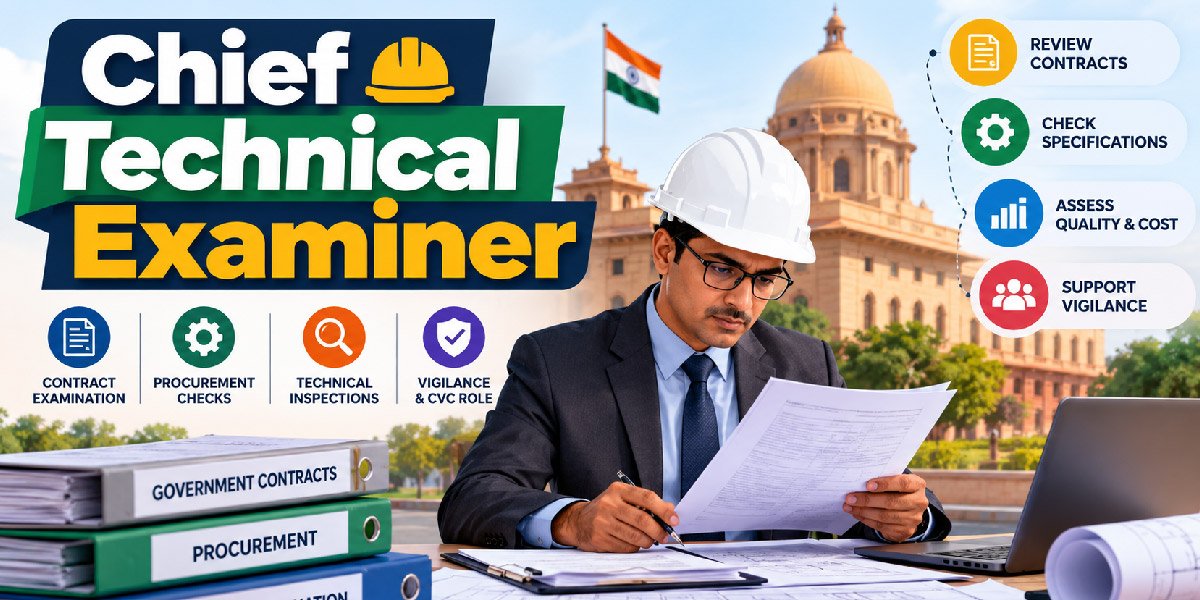
A Chief Technical Examiner is a senior technical officer connected with India’s Central Vigilance Commission and public procurement system. The role helps examine government contracts, technical decisions, quality, costs, payments, and procurement practices from an independent vigilance point of view.
The position is mainly associated with the Chief Technical Examiners’ Organisation (CTEO), the technical wing of the Central Vigilance Commission. Its work is not limited to construction. It can involve works, goods, equipment, IT procurement, consultancy, and services.
Understanding this role is useful for government officers, contractors, engineers, procurement professionals, students, and anyone researching public vigilance. This guide explains the CTE’s responsibilities, Intensive Examination process, contract selection, technical checks, reporting system, and importance in protecting public money.
What Is a Chief Technical Examiner?
In the Indian vigilance system, a Chief Technical Examiner is a senior officer who leads technical examination work within the CTEO. The examiner helps the Central Vigilance Commission understand complex procurement matters involving engineering, specifications, costs, contracts, measurements, quality, and payments.
The role is different from that of an engineer managing the original project. Project officials may plan, approve, supervise, or execute work, while CTEO independently examines selected procurement activities to identify technical, financial, contractual, or procedural concerns that require attention.
The present CVC framework places CTEO within the Commission as its specialist technical wing. Its primary responsibility includes technical and financial scrutiny of procurement with the wider aim of improving economy, efficiency, fairness, transparency, and the quality of public expenditure.
Why the CTEO Exists
Government organisations spend large amounts on construction, equipment, technology, maintenance, consultancy, and other services. Financial records alone may not show whether quantities are correct, specifications were followed, materials meet required standards, or the organisation actually received what it purchased.
Technical examination fills this gap. An experienced examiner can compare approved requirements with contracts, measurements, tests, invoices, and actual execution. This helps identify overpayments, weak quality controls, unsupported changes, restrictive tender conditions, and other problems that may affect public spending.
CTEO also supports preventive vigilance. Its purpose is not only to identify a mistake after it happens. When an examination reveals a weakness in procurement procedures, documentation, testing, or contract management, improvements can reduce similar problems in future contracts.
How the Chief Technical Examiners’ Organisation Developed
The CTEO began in 1957 under the former Ministry of Works, Housing and Supply. Its original purpose was to introduce continuing administrative and technical checks on Central Public Works Department projects and improve economy, financial control, and technical management of government works.
The Santhanam Committee later supported strengthening the organisation and extending its technical examination beyond CPWD projects. It also recommended attaching the technical unit to the Central Vigilance Commission so its specialist knowledge could support wider vigilance and inquiry work.
CTEO became part of the Central Vigilance Commission in 1964. Over time, government procurement became much broader than traditional civil construction, so the organisation’s examination work expanded to cover other forms of public procurement, including goods and different categories of services.
How the CTEO Is Organised
Under the 2026 CVC Vigilance Manual, CTEO is headed by two Chief Technical Examiners. This arrangement allows technical responsibilities to be divided according to the different knowledge required for civil projects and the many other forms of modern public procurement.
One CTE mainly deals with civil and horticulture-related procurement. The other covers areas including supply contracts, electrical and mechanical procurement, information technology, consultancy, non-consultancy services, and related matters requiring different forms of specialist technical review.
The Chief Technical Examiners are supported by Technical Examiners, Assistant Technical Examiners, and Junior Technical Examiners. Technical personnel are drawn from different government organisations on deputation, allowing CTEO to use practical experience from several areas of public-sector engineering and procurement.
What a Chief Technical Examiner Reviews
Technical examination may begin with planning. Estimates, quantities, specifications, approvals, technical sanctions, and the basis of proposed costs can be studied. Poor planning at this stage can later cause inflated expenditure, unclear tenders, unnecessary variations, disputes, delays, or weak competition.
Tendering can also receive close attention. Examiners may review eligibility requirements, technical conditions, bidding documents, evaluation decisions, accepted rates, and the final award. The important question is whether procurement was handled fairly and according to applicable rules and approved requirements.
After award, examination can cover contract conditions, measurements, quality, testing, payments, statutory obligations, variations, site records, inspection records, and acceptance. The exact review depends on whether the procurement involves construction, goods, professional services, equipment, technology, or another category.
What Is an Intensive Examination?
An Intensive Examination, often called an IE, is a detailed examination of a selected procurement contract by CTEO. It can follow the procurement from its early planning and tender stages through execution, payment, completion, and fulfilment of contractual obligations.
An IE is more detailed than checking whether documents simply exist. Technical officers can examine records, ask for clarification, inspect physical work or materials, verify measurements, and collect samples for testing when required. Some examinations can also be conducted mainly through records.
The current CVC Manual identifies several purposes for Intensive Examination, including systemic improvement, detection and recovery of overpayments, tax-related follow-up, correction of quality deficiencies, and disciplinary action where an issue is found to involve an appropriate vigilance angle.
How Procurement Cases Are Selected
CTEO cannot conduct a full Intensive Examination of every government procurement contract. Cases are therefore selected using available information, risk indicators, complaints, contract characteristics, and other relevant factors. Selection requires approval within the Commission’s prescribed examination process.
One important source is the Quarterly Progress Report, or QPR, submitted through Chief Vigilance Officers. Contracts may also attract attention because of complaints, high value, unusual procurement features, technical importance, serious delays, cost overruns, or recommendations from the concerned CVO.
The CVC revised QPR reporting threshold values through a circular dated March 16, 2026. This is important because older articles may still publish previous limits. Anyone using QPR thresholds professionally should therefore check the latest CVC instructions instead of relying on outdated figures.
What Happens During an Examination?
Once a contract is approved for examination, CTEO can request important records from the organisation through its Chief Vigilance Officer. These may include the contract agreement, payment records, project information, tender documents, measurements, testing information, and other files needed for technical scrutiny.
Where a field examination is required, technical officers can first study documents and then inspect the work, materials, or services. Physical checks may include measurements, quality verification, and collection of samples for laboratory testing where such testing is relevant and reasonably possible.
Examinations are generally conducted with advance information so responsible officials can provide documents and explanations. However, the current framework also allows surprise inspections in suitable cases. Clarification memos may be issued when additional records or explanations are needed during the examination.
What Problems Can Technical Examination Find?
A technical examination may identify an estimate that lacks a reasonable basis, specifications that are poorly prepared, or tender requirements that unnecessarily restrict competition. These problems can affect fairness and cost even before the successful contractor begins performing the contract.
During execution, examiners may find differences involving measurements, quantities, workmanship, materials, tests, approved designs, contract requirements, delivery, or acceptance. A recorded quantity that does not match actual work can create an overpayment, while poor testing may create uncertainty about quality.
Other observations can involve unsupported variations, incomplete records, delays, cost increases, incorrect payments, weak contract management, tax issues, or failure to follow statutory requirements. Importantly, an observation does not automatically prove corruption; facts and explanations must still be examined.
What Happens After the Examination?
After the examination work is completed, an Intensive Examination Report is prepared with relevant observations. The report records issues identified through technical scrutiny and provides a structured basis for asking the organisation to explain findings, provide documents, or take corrective action.
The concerned organisation generally responds through its Chief Vigilance Officer. Some observations may be settled when records or explanations satisfactorily answer the technical concern. Other matters may require recovery of excess payments, correction of defects, procedural improvement, or additional examination.
Where an issue has a perceived vigilance angle, it can be converted into a vigilance reference following the prescribed process. CTEO therefore provides specialist technical examination, while further vigilance or disciplinary action follows the wider CVC framework when the circumstances justify it.
Chief Technical Examiner and Chief Vigilance Officer
A Chief Technical Examiner and a Chief Vigilance Officer have connected but different responsibilities. The CTE provides specialised technical scrutiny through CTEO, while the CVO manages and coordinates vigilance work inside the ministry, department, public-sector enterprise, bank, or other covered organisation.
The CVO plays an important role during CTEO examinations. Responsibilities can include supplying QPR information and requested records, coordinating replies, ensuring relevant officials are available, helping with sample testing, supporting defect correction, and following directions arising from the examination process.
CVOs are also expected to conduct CTE-type Intensive Examinations within their own organisations. These inspections expand technical vigilance coverage because the central CTEO team has limited resources and cannot personally conduct detailed examination of every significant procurement contract.
What Types of Procurement Can Be Examined?
CTEO should not be understood simply as a construction inspection unit. Modern public procurement covers a much wider field, and the CVC framework recognises examination of works, goods, consultancy services, non-consultancy services, and other technically important contractual activities.
Civil construction may require measurements, drawings, material tests, and workmanship checks. Electrical or mechanical procurement may require different technical verification, while equipment purchases may involve approved specifications, inspection certificates, testing, delivery, commissioning, warranties, and formal acceptance of supplied items.
Technology and service contracts require another approach. Examination may focus on scope, technical requirements, milestones, deliverables, acceptance criteria, payments, contract conditions, and service performance. The examination method therefore changes according to the actual subject and risks of the procurement.
Skills Needed for a Chief Technical Examiner
Strong technical knowledge is essential because the examiner may need to understand complex engineering, equipment, specifications, quality systems, or procurement records. However, practical engineering experience alone is not enough for work involving large government contracts and public accountability.
A CTE also needs knowledge of tendering, public procurement principles, contract administration, costing, measurements, testing, documentation, and relevant government rules. Good judgment is necessary because a technical difference may result from negligence, poor records, a valid engineering decision, or a more serious irregularity.
Clear writing and independence are equally important. An observation must explain what was examined, what evidence was found, and why the issue matters. Conclusions should come from records, technical requirements, tests, measurements, and contract conditions rather than unsupported assumptions.
How Organisations Can Prepare for Examination
The best preparation for a CTEO examination begins when procurement starts, not after an inspection notice arrives. Estimates, approvals, tender records, evaluation documents, contracts, drawings, measurements, testing reports, bills, correspondence, and completion records should be accurate and properly maintained.
Important changes should have a clear audit trail. When quantities, design, scope, specifications, rates, completion dates, or other contract conditions change, the organisation should record the reason, necessary approvals, financial effect, and technical basis for the decision.
Quality and payment records deserve particular attention. Required inspections and tests should be documented when performed, while payments should match approved rates and accepted quantities, goods, or services. Good records make technical decisions easier to understand and defend during examination.
Why the Chief Technical Examiner Role Matters
Public procurement directly affects roads, buildings, transport, energy, technology, equipment, banking infrastructure, and many other public services. Technical failures or weak contracts can create financial losses even when accounting entries and administrative files initially appear complete.
The scale can be substantial. In 2024, CTEO reported 81 Intensive Examinations covering 64 organisations, involving procurement cases valued at more than ₹33,514.68 crore. Reported follow-up on IE observations also resulted in recoveries of ₹116.75 crore that year.
Those figures do not mean the full procurement value involved irregularities. They show why specialist examination matters. CTEO combines technical knowledge with vigilance oversight to improve accountability, identify avoidable losses, strengthen procurement systems, and encourage better use of public resources.
Final Thoughts
A Chief Technical Examiner plays a specialised role in India’s public procurement and vigilance framework. Working through the CTEO, the officer helps examine whether government procurement has been planned, tendered, executed, measured, tested, accepted, and paid for properly.
The role combines engineering knowledge with procurement, contract, financial, and vigilance understanding. Its value comes from looking beyond paperwork and examining whether technical evidence supports what an organisation approved, received, measured, accepted, and ultimately paid for with public funds.
For readers researching the term, the most important point is simple: the Chief Technical Examiner is not merely a site inspector. The role supports independent technical scrutiny, corrective action, preventive vigilance, and stronger procurement systems across organisations under the CVC framework.
(FAQs)
What is the full form of CTE?
CTE stands for Chief Technical Examiner. In the Central Vigilance Commission system, a CTE helps lead specialist technical examination of public procurement, including contracts involving works, goods, engineering systems, consultancy, services, quality, measurements, and payments.
What does CTEO stand for?
CTEO stands for Chief Technical Examiners’ Organisation. It is the technical wing of India’s Central Vigilance Commission and conducts technical and financial scrutiny of selected procurement activities while also supporting preventive vigilance and systemic improvement.
What is a CTE Intensive Examination?
A CTE Intensive Examination is a detailed review of a selected procurement contract. It may include examination of planning records, tender documents, agreements, bills, measurements, quality records, physical work, materials, services, and other evidence relevant to the contract.
Does a CTE observation mean corruption has occurred?
No. An observation identifies a technical, contractual, financial, procedural, or quality issue that requires consideration. Some observations may have valid explanations, while others can require corrective action or further vigilance examination depending on the available evidence.
What is the difference between a CTE and a CVO?
A CTE provides specialist technical examination through the CTEO. A Chief Vigilance Officer, or CVO, coordinates vigilance activities within an organisation and also assists with CTEO examinations, responses, follow-up action, and CTE-type inspections inside that organisation.
Can CTEO examine IT and service contracts?
Yes. The current CVC framework is not limited to civil works. CTEO responsibilities can include IT procurement, supply contracts, electrical and mechanical procurement, consultancy, non-consultancy services, and other contractual activities requiring specialist technical and procurement examination.
you may also read: AllysPlay.com: Gaming Guides, Reviews, News and More









Discussion about this post