

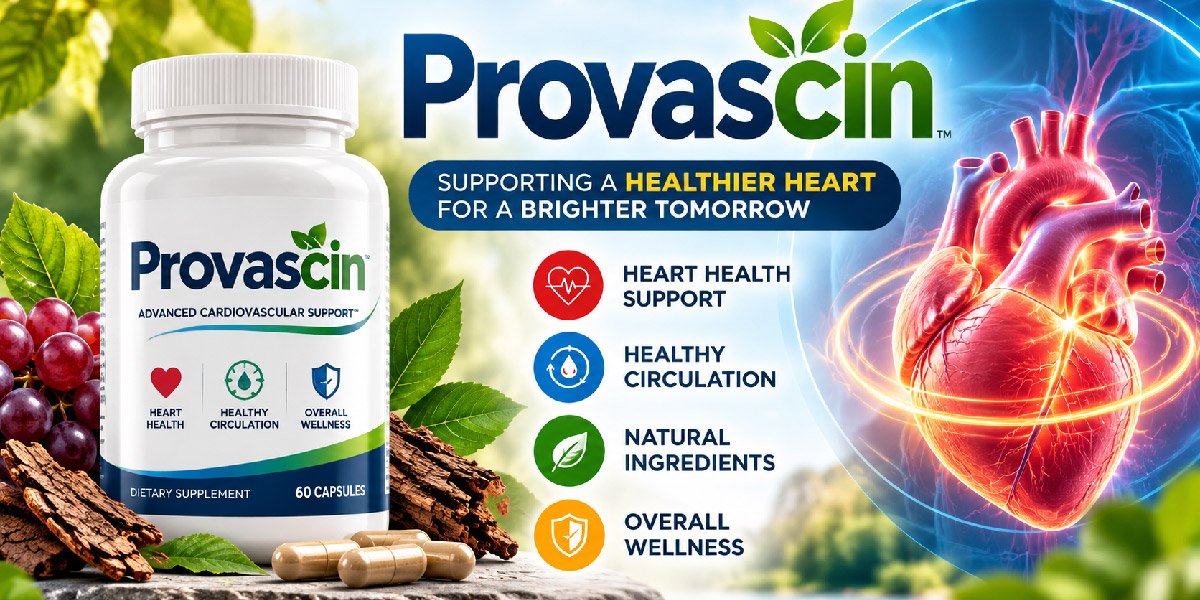
Provascin is a nutritional supplement associated with cardiovascular wellness, circulation, cellular energy, and antioxidant support. The best-documented version is PURICA Provascin, a multi-ingredient capsule formula containing L-carnitine, Coenzyme Q10, Chaga mushroom, alpha-lipoic acid, and plant extracts.
People searching for Provascin often want to know whether it supports heart health, improves circulation, or helps manage blood pressure and cholesterol. Although several ingredients have been studied individually, that does not mean the complete formula provides the same results.
Understanding this difference is important. Provascin should be viewed as a nutritional supplement rather than a proven treatment for cardiovascular disease. This guide explains its background, ingredients, potential benefits, safety concerns, interactions, evidence, and other important details.
What Is Provascin?
Provascin is best known as a natural health supplement historically associated with PURICA, a Canadian wellness brand. It was formulated with several nutrients and plant-derived ingredients rather than one pharmaceutical active ingredient designed to treat a particular disease.
The formula was mainly promoted for cardiovascular and circulatory support. Other areas associated with it included cellular energy, metabolism, antioxidant activity, and general wellness. These descriptions explain the purpose of the formula but should not automatically be considered proven medical benefits.
Most importantly, Provascin should not be confused with prescription cardiovascular medicine. It is not an established replacement for medicines prescribed for hypertension, high cholesterol, heart failure, blood clots, diabetes, or other serious medical conditions requiring professional diagnosis and treatment.
The History of Provascin
The Provascin name has existed for many years. Historical trademark information connects PROVASCIN with The Nutraceutical Medicine Company Inc., with trademark activity dating to the early 2000s. Historical product information later associated the supplement with the PURICA brand.
Older product listings describe Provascin as a capsule-based nutritional formula. A 120-capsule package is well documented in historical retailer information, while references to other package sizes can also be found. Package sizes and formulas should always be checked directly.
Historical records establish that Provascin was marketed as a nutritional product. However, old online listings do not necessarily establish current manufacturing or availability. Retailer pages can remain searchable long after a product becomes difficult to obtain or leaves normal distribution channels.
What Was Provascin Used For?
Provascin was primarily promoted as nutritional support for cardiovascular wellness. Its combination of nutrients and antioxidants was associated with normal cellular energy, circulation and metabolic processes. Some historical descriptions also connected the formula with maintaining healthy cardiovascular function.
These are supplement-related uses rather than evidence that Provascin can diagnose, prevent, cure, or treat cardiovascular disease. A product supporting normal body functions is fundamentally different from a medicine proven through clinical studies for treating a diagnosed medical condition.
People with hypertension, high cholesterol, diabetes, cardiovascular disease, or circulation disorders should therefore avoid replacing established treatment with Provascin. Proper treatment depends on the underlying diagnosis, medical history, current medicines, laboratory results, and recommendations from qualified healthcare professionals.
Main Ingredients in Provascin
Historical product information describes Provascin as containing eight notable ingredients: L-carnitine, alpha-ketoglutaric acid, Chaga mushroom, Coenzyme Q10, betaine hydrochloride, alpha-lipoic acid, grape seed extract, and green tea extract. Each ingredient serves a different nutritional purpose.
Reported historical amounts per capsule include approximately 188 mg L-carnitine, 125 mg alpha-ketoglutaric acid, 125 mg Chaga, 38 mg CoQ10, 31 mg betaine hydrochloride, 13 mg alpha-lipoic acid, and 9 mg each of grape seed and green tea extracts.
These figures describe a historical formulation and should not be assumed to apply to every product currently carrying the Provascin name. Formulas can change. Consumers should use the ingredient panel and serving information printed on their actual package as their primary reference.
L-Carnitine and Cellular Energy
L-carnitine is a naturally occurring compound involved in energy metabolism. One of its important biological functions involves helping transport long-chain fatty acids into mitochondria, where they can be used in processes that contribute to cellular energy production.
This role helps explain why L-carnitine appears in supplements marketed around energy, metabolism, exercise, and cardiovascular wellness. Historical information indicates that the Provascin formulation supplied about 188 mg of L-carnitine in each capsule.
However, evidence concerning an individual nutrient cannot automatically establish the effectiveness of a multi-ingredient product. Research studies may use different L-carnitine forms, doses, treatment periods, and patient populations. Therefore, L-carnitine research alone cannot prove that Provascin produces identical clinical outcomes.
CoQ10 and Provascin
Coenzyme Q10, commonly shortened to CoQ10, is naturally present in the human body. It participates in mitochondrial energy production and also has antioxidant functions. These characteristics have made CoQ10 an ingredient of considerable interest in cardiovascular and nutritional research.
Historical Provascin information lists approximately 38 mg of CoQ10 per capsule. CoQ10 has been independently studied in several health contexts, including certain cardiovascular conditions. However, study outcomes vary according to factors such as dosage, population, medical condition, and research design.
A common mistake is to use research about CoQ10 as direct evidence for Provascin. A finished supplement contains multiple substances at specific doses. Its effectiveness must ideally be evaluated as a complete formulation rather than inferred solely from studies of individual components.
Chaga and Antioxidant Support
Chaga, scientifically known as Inonotus obliquus, is a fungus commonly associated with birch trees in colder regions. It has a history of traditional use and contains numerous compounds that have attracted scientific interest, particularly in research concerning antioxidant activity.
Historical Provascin formulations reportedly included about 125 mg of micronized Chaga per capsule. Its antioxidant-related properties help explain why the ingredient was incorporated into a supplement designed around cellular and cardiovascular wellness alongside several other antioxidant-related compounds.
However, laboratory or animal research involving Chaga cannot automatically demonstrate a meaningful cardiovascular benefit in humans. Chaga can also raise safety concerns for certain individuals and may interact with medicines. “Natural” should therefore never be interpreted as automatically effective or risk-free.
Other Important Provascin Ingredients
Alpha-ketoglutaric acid is involved in normal metabolic pathways associated with cellular energy. Betaine hydrochloride is another component reported in historical Provascin formulations. Their presence contributes to the supplement’s broader nutritional formula rather than establishing a specific cardiovascular treatment effect.
Alpha-lipoic acid is involved in cellular metabolism and also functions as an antioxidant. It has been researched independently for several purposes, particularly metabolic health. However, the relatively small amount reported in Provascin should not be directly compared with unrelated research using different doses.
Grape seed and green tea extracts provide plant compounds such as polyphenols and catechins. These compounds are widely studied for biological and antioxidant activities. Nevertheless, research involving isolated extracts cannot establish that the complete Provascin combination prevents or treats cardiovascular disease.
How Does Provascin Work?
There is no single mechanism that explains Provascin because it combines ingredients with different biological roles. L-carnitine, CoQ10, and alpha-ketoglutaric acid are associated with processes involving metabolism and cellular energy, although each performs a different function.
Other components are associated more strongly with antioxidant activity. These include alpha-lipoic acid and compounds found in Chaga, grape seed, and green tea extracts. Antioxidants participate in processes involving oxidative stress, but this does not mean antioxidant supplements automatically prevent cardiovascular disease.
This distinction matters when evaluating Provascin claims. A biologically plausible ingredient is not the same as a clinically proven treatment. Demonstrating that a compound participates in normal physiology does not demonstrate that taking a supplement containing that compound will produce a specific medical outcome.
Potential Benefits of Provascin
The proposed benefits of Provascin largely reflect the biological roles of its ingredients and its historical positioning as a cardiovascular wellness supplement. Cellular energy and antioxidant support are two of the clearest themes found throughout its multi-ingredient formulation.
L-carnitine and CoQ10 provide the strongest connection with energy-related processes, while Chaga, alpha-lipoic acid, grape seed, and green tea contribute antioxidant-related compounds. Together, these ingredients explain why Provascin was promoted as broader nutritional support instead of a single-purpose supplement.
Potential benefits should nevertheless be separated from proven outcomes. Strong direct evidence demonstrating that Provascin itself prevents heart attacks, clears blocked arteries, reliably reduces cholesterol, controls hypertension, or treats cardiovascular disease has not been established by the information available for the complete formulation.
Can Provascin Improve Blood Circulation?
Provascin has historically been associated with circulatory wellness, which is one reason people searching for the supplement may expect it to improve blood flow. Its nutritional and antioxidant ingredients provide a possible rationale for marketing the formula around cardiovascular support.
Poor circulation, however, is not one disease. Problems with blood flow can result from conditions involving arteries, veins, the heart, diabetes, blood clots, or other medical issues. Treatment depends on identifying the actual cause rather than simply attempting to “improve circulation.”
Persistent leg swelling, unusual skin changes, significant pain, numbness, wounds that heal poorly, or sudden circulation-related symptoms deserve medical attention. There is insufficient evidence to consider Provascin a substitute for proper diagnosis or established treatment of a circulation disorder.
Does Provascin Lower Blood Pressure?
Some ingredients associated with Provascin, particularly CoQ10, have been investigated independently in cardiovascular research. This may explain why people sometimes search for connections between Provascin and blood-pressure management. Ingredient research, however, cannot establish the effect of the complete formula.
There is insufficient strong product-specific evidence to state that Provascin reliably lowers high blood pressure. Hypertension is an important medical condition because uncontrolled blood pressure can increase the risk of stroke, heart disease, kidney problems, and other serious complications.
Anyone receiving treatment for hypertension should continue following their prescribed care plan. Provascin should not replace blood-pressure medicine without medical guidance. People considering the supplement alongside existing treatment should first ask a doctor or pharmacist about possible ingredient and medication interactions.
Provascin for Cholesterol and Blood Sugar
Cardiovascular health is closely connected with cholesterol and glucose management. Some Provascin ingredients have independently attracted research interest in metabolic health. Alpha-lipoic acid, for example, participates in energy metabolism, while plant extracts contain compounds studied for numerous biological effects.
That does not make Provascin a cholesterol-lowering or diabetes treatment. The doses present in a mixed supplement may also differ considerably from doses investigated in individual clinical studies. Absorption, formulation, treatment duration, and participants can further influence research results.
People with diabetes or abnormal cholesterol levels should not discontinue prescribed medicines in favor of Provascin. Some supplement ingredients may themselves influence blood sugar or interact with medicines, making professional advice particularly important for anyone already receiving treatment for a metabolic condition.
Is Provascin Effective?
Assessing Provascin requires separating evidence concerning individual ingredients from evidence concerning the finished formula. Several components, including CoQ10, L-carnitine, alpha-lipoic acid, and plant-derived compounds, have been independently investigated in scientific research for different health-related purposes.
However, a clinical study involving one ingredient cannot simply be transferred to a combination supplement. Researchers may test much larger amounts, different formulations, specific medical populations, or treatment periods that bear little resemblance to how the ingredient appears within Provascin.
Therefore, it is more accurate to describe Provascin as a nutritional support product rather than a proven cardiovascular treatment. There is insufficient strong direct evidence for the complete formula to claim that it reliably prevents cardiovascular disease or replaces established medical therapies.
Provascin Dosage and Use
Historical retailer information may contain suggested serving amounts for Provascin. Older recommendations should be treated carefully because products, formulations, regulatory guidance, and individual health circumstances can change. An archived retailer instruction should not automatically become modern personalized dosage advice.
Anyone purchasing Provascin should read the label on that specific bottle. The serving size, ingredient amounts, directions, warnings, expiration date, and manufacturer details are more relevant than instructions copied from an older version of the product found elsewhere online.
Taking a larger amount does not necessarily produce stronger benefits. It can increase exposure to multiple active ingredients and potentially increase adverse effects or interactions. People taking prescription medication should consult a healthcare professional before beginning a multi-ingredient supplement.
Possible Provascin Side Effects
Because Provascin combines several biologically active ingredients, side effects are possible. Depending on the ingredient, dose, and individual response, possible problems may include nausea, digestive discomfort, loose stools, headaches, or sensitivity to one of the formula’s components.
Plant-derived ingredients can also cause unwanted effects. Concentrated extracts are different from ordinary foods or drinks containing related compounds. Green tea extract, for example, should not automatically be considered equivalent to drinking a normal cup of brewed green tea.
Anyone experiencing a significant or unexpected reaction after using a supplement should stop and seek appropriate medical advice. Symptoms suggesting a serious allergic reaction, such as difficulty breathing or swelling of the face or throat, require urgent medical attention rather than continued supplement use.
Provascin Drug Interactions and Precautions
Medication interactions are an important consideration because Provascin contains numerous active ingredients. Particular caution may be appropriate for people using anticoagulants or antiplatelet drugs, diabetes treatments, blood-pressure medicines, or other products that could overlap with the supplement’s biological effects.
People with cardiovascular, liver, kidney, metabolic, autoimmune, or other chronic medical conditions should discuss the complete ingredient list with an appropriate healthcare professional. Pregnancy and breastfeeding also require additional caution because safety information for complex supplement combinations may be limited.
Showing a doctor or pharmacist the actual bottle is especially useful. A product name alone provides limited information, whereas its Supplement Facts or medicinal-ingredient panel allows a professional to evaluate specific ingredients, doses, duplicate supplementation, and potential medication interactions more accurately.
Is Provascin an FDA-Approved Medicine?
Provascin should not be presented as an FDA-approved prescription medicine for cardiovascular disease. Dietary supplements and prescription drugs occupy different regulatory categories in the United States, and supplements generally do not undergo the same premarket effectiveness approval required for new pharmaceutical drugs.
This distinction does not automatically mean a dietary supplement is unsafe. Instead, it means that being available for purchase should not be interpreted as regulatory proof that the product successfully treats hypertension, high cholesterol, heart disease, diabetes, or circulation disorders.
Consumers should therefore be cautious when encountering websites that describe Provascin as though it were a proven prescription cardiovascular drug. The historically documented PURICA product is better understood as a nutritional or natural health supplement, and medical claims require an appropriate level of clinical evidence.
Is Provascin Still Available?
Historical information confirms that PURICA Provascin was sold in capsule form, including documented 120-capsule packaging. Older online references may mention additional package sizes. However, an old retailer page does not necessarily mean the same product remains in active production or current stock.
Anyone finding Provascin today should carefully examine the seller and packaging. Check the manufacturer’s identity, complete ingredients, expiration date, lot information, tamper-resistant seal, storage conditions, serving instructions, and whether the formula corresponds with the product you intended to purchase.
This is especially important with older or difficult-to-find supplements. A similarly named product may contain different ingredients, while old inventory could have storage or expiration concerns. Consumers should never assume that every product carrying the Provascin name is identical to the historical PURICA formulation.
What to Check Before Buying Provascin
Start by identifying exactly what is being sold. Compare the manufacturer and ingredient panel with reliable information about the product. A legitimate package should clearly provide ingredients, amounts, directions, warnings, expiration information, and other labeling required in the market where it is sold.
Avoid sellers making extraordinary medical promises. Statements that Provascin can cure heart disease, permanently eliminate hypertension, clear blocked arteries, replace prescription drugs, or guarantee cardiovascular protection should be treated cautiously unless supported by appropriate high-quality clinical and regulatory evidence.
Finally, consider your existing treatment. Supplements can duplicate ingredients already present in other products or interact with medicines. People managing chronic health conditions should have a pharmacist or doctor review the complete formula rather than relying exclusively on advertisements, testimonials, or retailer descriptions.
Final Thoughts
Provascin is best understood as a multi-ingredient nutritional supplement historically associated with PURICA and cardiovascular wellness. Its formula combined L-carnitine, alpha-ketoglutaric acid, Chaga, CoQ10, betaine hydrochloride, alpha-lipoic acid, grape seed extract, and green tea extract.
Several of these ingredients have scientifically interesting roles involving cellular energy, metabolism, or antioxidant activity. However, research concerning individual ingredients cannot automatically demonstrate that the complete Provascin formulation prevents disease or provides the same outcomes observed in separate clinical studies.
Provascin should therefore not replace proven treatment for hypertension, high cholesterol, diabetes, cardiovascular disease, or circulation disorders. Anyone considering the supplement should verify the exact product and discuss it with a healthcare professional when medications or existing medical conditions are involved.
(FAQs)
What is Provascin?
Provascin is best documented as a multi-ingredient nutritional supplement historically associated with PURICA. It was promoted mainly for cardiovascular wellness, circulation, cellular energy, metabolism, and antioxidant support rather than as a prescription cardiovascular medicine.
What is Provascin used for?
Provascin was marketed as nutritional support for cardiovascular and circulatory wellness. Its ingredients are also associated with energy metabolism and antioxidant activity. These intended uses do not establish Provascin as a treatment for cardiovascular disease.
What ingredients are in Provascin?
Historical information lists L-carnitine, alpha-ketoglutaric acid, Chaga mushroom, Coenzyme Q10, betaine hydrochloride, alpha-lipoic acid, grape seed extract, and green tea extract. Current buyers should always verify ingredients directly from their specific product label.
Does Provascin lower blood pressure?
There is insufficient strong direct evidence showing that the complete Provascin formulation reliably lowers high blood pressure. People diagnosed with hypertension should follow professional medical advice and should not replace prescribed blood-pressure medication with Provascin.
Is Provascin good for cholesterol?
Provascin has ingredients associated with cardiovascular and metabolic research, but this does not prove that the complete formula reliably lowers cholesterol. People requiring cholesterol treatment should continue following their healthcare professional’s recommended treatment and monitoring plan.
What are the possible side effects of Provascin?
Possible effects may include digestive discomfort, nausea, loose stools, headaches, or reactions to particular ingredients. Because the formula contains several active substances, individual responses and medication interactions can differ from one person to another.
Can Provascin be taken with heart medication?
That depends on the exact medicine, dose, medical condition, and Provascin formulation. People using cardiovascular, anticoagulant, blood-pressure, diabetes, or other prescription medicines should have a doctor or pharmacist review the supplement’s complete ingredient label before using it.
Is Provascin still available?
Historical records and retailer information confirm that PURICA Provascin was previously sold, including in capsule form. Current availability may be limited, so buyers should verify the manufacturer, ingredients, seller, expiration date, packaging, and authenticity before purchasing.
you may also read: Nemin.io: Powerful Free Business Calculators You Should Know








Discussion about this post