

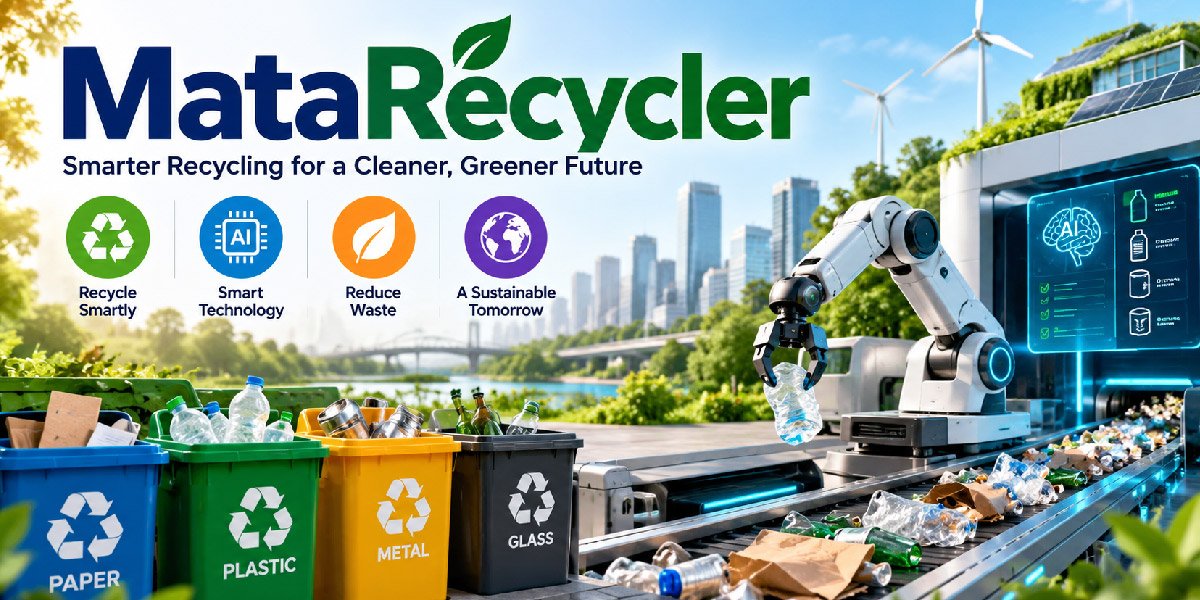
Recycling is no longer only about putting paper, bottles, and cans into separate bins. Modern waste management also involves reducing unnecessary waste, reusing useful products, recovering valuable materials, and using better information to make responsible decisions. MataRecycler has appeared online within this wider sustainability conversation.
The term is mainly connected with recycling education, waste reduction, environmental awareness, and discussions about smarter recycling systems. Some online descriptions also connect MataRecycler with artificial intelligence, sensors, automated sorting, and digital waste tracking, although these descriptions should not automatically be treated as specifications of one established product.
Understanding MataRecycler therefore requires looking beyond the name. The important questions are how modern recycling actually works, where technology can improve the process, what individuals and businesses can do themselves, and how responsible resource management can reduce the amount of useful material that becomes waste.
What Is MataRecycler?
MataRecycler is a recycling-related name found in online environmental content. It is associated with subjects such as recycling methods, sustainable living, responsible disposal, resource recovery, waste reduction, and the growing use of technology within modern waste-management operations.
The term does not have one universally established technical definition. Depending on the source, MataRecycler may be discussed as an informational recycling resource or as a broader idea involving technology-assisted waste management. These different descriptions should not automatically be combined into one product definition.
A useful way to understand MataRecycler is as part of the wider movement toward smarter resource management. That includes teaching people better recycling habits while exploring technologies that can improve collection, material identification, sorting, tracking, processing, and decision-making throughout the waste-management system.
Why MataRecycler Is Gaining Attention
Waste is a growing challenge because modern households and businesses consume large quantities of packaged goods, electronics, food, clothing, and disposable products. Managing these materials responsibly requires more than simply collecting rubbish and transporting everything to a disposal facility.
People are also becoming more interested in what happens after something enters a recycling bin. An item may need collection, additional sorting, cleaning, processing, and a manufacturer willing to use the recovered material before it successfully returns to the economy.
MataRecycler attracts attention because it sits at the intersection of these concerns. It represents interest in making recycling clearer, more efficient, and potentially more technology-driven while encouraging people to think carefully about what they purchase, discard, reuse, and place into recycling systems.
How Modern Recycling Actually Works
Recycling starts with separating materials that have a realistic recovery route. Paper, cardboard, metals, glass, and selected plastics are common examples, although accepted materials differ between locations. Electronics, batteries, chemicals, and other special waste normally require dedicated collection arrangements.
After collection, recyclable materials may travel to a sorting or material recovery facility. Equipment and workers separate different material streams using methods based on properties such as size, weight, magnetism, appearance, and composition. Contaminants and unsuitable objects must also be identified and removed.
Separated materials then require appropriate processing. Paper may be pulped, metals can be prepared for remelting, and glass can be processed for suitable manufacturing applications. Successful recycling ultimately requires demand for the recovered material rather than merely collecting large quantities of discarded products.
How Technology Can Improve Recycling
Technology can help recycling facilities process complex waste streams more efficiently. Conveyor systems, magnets, screens, optical equipment, cameras, sensors, robotic mechanisms, and software can all perform different roles. The correct combination depends on the material stream and facility design.
These technologies are particularly useful when large quantities of mixed material must be inspected quickly. Machines can perform repetitive tasks consistently, while digital systems can record operational information that helps managers understand material volumes, equipment performance, contamination, and changes in processing demand.
This technological direction helps explain why MataRecycler is sometimes connected with smart recycling. However, established technologies used throughout the recycling industry should not automatically be presented as confirmed MataRecycler features. Specific product capabilities require reliable documentation before they can be treated as factual.
The Role of Artificial Intelligence in Recycling
Artificial intelligence can support recycling through computer vision. Cameras capture images of objects moving through a facility, while trained software analyzes visible characteristics and attempts to classify selected items. The information can then support mechanical or robotic sorting equipment.
AI can become useful where conventional equipment has difficulty distinguishing between certain objects. Its performance, however, depends on training data, camera quality, lighting, material condition, processing speed, and the range of objects the system was originally designed to recognize.
Artificial intelligence does not solve every recycling problem. It cannot make an unsuitable material recyclable, create processing infrastructure where none exists, or guarantee demand for recovered resources. AI is therefore a supporting technology within a much larger physical and economic recycling system.
Smart Sensors and Automated Sorting
Sensors allow recycling equipment to examine characteristics that may not be obvious through ordinary visual inspection. Depending on the facility and application, technologies can include optical identification, near-infrared detection, magnetic separation, weight measurement, and other specialized material-recognition methods.
Once a material has been identified, automated equipment can help separate it from the wider waste stream. Air jets, mechanical systems, conveyor routing, and robotic picking equipment are examples of methods that may move selected objects toward their appropriate processing categories.
Automation can increase processing capacity and consistency, but equipment still requires maintenance and quality control. Dirty items, overlapping objects, unusual packaging, and products made from several materials can create sorting difficulties. Human supervision therefore remains important in many modern recycling facilities.
Why Recycling Contamination Matters
Contamination occurs when unsuitable items or substances enter a recycling stream. Common examples include food-covered packaging, liquids, non-accepted plastics, and items placed in the wrong container. Contamination can make sorting more difficult and lower the quality of recovered material.
One common mistake is assuming that every product displaying a recycling symbol can go into any recycling bin. Local acceptance depends on collection arrangements, processing equipment, material markets, and other factors. Residents should therefore follow instructions from their actual recycling provider.
Better recycling education is one area where a concept such as MataRecycler can provide practical value. Clear explanations about preparation, separation, and local acceptance can prevent mistakes before waste reaches processing facilities, reducing avoidable sorting problems further down the recycling chain.
MataRecycler and Sustainable Resource Use
Responsible waste management starts before an object reaches the bin. Buying durable products, avoiding unnecessary packaging, repairing useful items, and choosing reusable alternatives can prevent waste from being created. Recycling becomes relevant when suitable materials can no longer reasonably remain in use.
Reuse is particularly important because it can extend a product’s useful life without immediately requiring industrial processing. A strong shipping box, storage container, piece of furniture, or functioning electronic device may have further value before its materials eventually require recovery.
MataRecycler can therefore be viewed within a wider sustainability framework rather than recycling alone. The strongest resource-management approach combines sensible consumption, waste prevention, repair, reuse, suitable recycling, and responsible disposal for materials that cannot safely or economically be recovered.
MataRecycler for Homes and Communities
Households can improve recycling without purchasing complicated equipment. The first step is checking local collection rules and identifying the materials actually accepted. Separate containers can then be placed conveniently around the home to make correct disposal easier for everyone.
Families can also conduct a simple waste audit. Examining general waste for several days can reveal repeated problems such as excessive food waste, disposable packaging, or recyclable material entering the wrong container. The findings can guide realistic changes instead of relying on assumptions.
Community education can strengthen these efforts. Schools, residential groups, municipalities, and environmental organizations can explain material categories, special waste collection, and waste prevention. Clear local guidance is particularly important because recycling rules can differ significantly between cities, regions, and processing providers.
How Businesses Can Use Smarter Recycling
Businesses should begin by identifying their major waste streams. An office may produce paper, cardboard, food waste, and beverage containers, while a warehouse may handle large amounts of transport packaging. Manufacturing operations can generate entirely different materials requiring specialized handling.
After identifying waste streams, managers can position clearly marked containers near the places where those materials are produced. Collection frequency, container capacity, contamination, and recycling costs can then be reviewed periodically to determine whether the system is operating efficiently.
Digital monitoring can make these reviews easier by recording collection and waste information. Reliable data may reveal seasonal changes or recurring problems. Technology provides the greatest value when it helps solve a defined operational issue rather than simply adding another digital system.
Electronic Waste Needs Special Attention
Electronic waste requires particular care because devices can contain valuable recoverable materials alongside components that should not enter normal household recycling. Computers, phones, accessories, appliances, and similar products may need specialist collection services depending on local regulations and recycling infrastructure.
Batteries deserve additional attention. Certain batteries, particularly damaged lithium-ion batteries, can present fire and safety risks when incorrectly stored, transported, or processed. Consumers and businesses should use suitable collection services and follow the handling instructions provided by relevant local authorities or recyclers.
This highlights an important principle behind responsible recycling: correct disposal is about more than recovering valuable resources. A good system must also consider worker safety, transportation, environmental protection, hazardous materials, and the technical capabilities of the facility receiving the discarded product.
Benefits of Smarter Recycling Practices
Better material separation can improve the quality of recyclable streams. Cleaner, correctly identified materials generally create fewer processing complications than heavily contaminated mixed waste. Clear instructions and appropriate sorting technology can therefore help recovery facilities manage useful resources more effectively.
Recycling can also conserve resources when recovered material successfully replaces some demand for virgin raw materials. The size of the environmental benefit varies according to material type, transportation, processing requirements, energy sources, and what eventually happens to the recovered output.
Another advantage is better information. Households, companies, and municipalities that understand their waste streams can make more informed decisions about purchasing, container capacity, collection frequency, recycling services, and waste prevention. Measurement turns sustainability from a broad intention into something more manageable.
Challenges Facing Smart Recycling Systems
Advanced recycling technology can be expensive. Cameras, sensors, robotics, software, conveyors, and related equipment require installation, electricity, maintenance, employee training, replacement components, and technical support. A facility must determine whether expected operational improvements justify the complete long-term cost.
Infrastructure is another major limitation. Smart sorting cannot compensate for the absence of reliable collection services, suitable processing facilities, or markets for recovered materials. Communities need functioning physical systems alongside technology if they want recyclable resources to move successfully through the recovery chain.
Environmental trade-offs should also be considered. Collection vehicles consume energy, recycling plants require power, and some materials need extensive processing. Responsible evaluation therefore examines the whole lifecycle instead of assuming that every recycling activity automatically produces the same level of environmental benefit.
How to Evaluate MataRecycler Information
Start by identifying the original source behind a MataRecycler claim. Determine whether it comes from an educational website, manufacturer, recycling operator, research organization, municipality, or another source. Different organizations have different levels of authority when making technical or performance claims.
Be particularly careful with exact percentages involving sorting accuracy, recycling improvements, landfill reductions, cost savings, or environmental benefits. Meaningful performance figures should explain what was measured, where testing occurred, which materials were involved, and how the results were independently evaluated.
The same principle applies to claims involving AI and smart sensors. These technologies certainly exist within modern waste management, but their existence does not demonstrate that every recycling platform uses them. Separating established industry technology from brand-specific claims produces more reliable information.
Practical Ways to Improve Recycling
Begin by learning what your local recycling service accepts. Keep recyclable materials reasonably clean where required, prevent food and liquids from contaminating appropriate recycling streams, and use dedicated collection services for batteries, electronics, chemicals, and other materials requiring special treatment.
Next, make waste prevention part of the routine. Choose durable products where practical, reduce unnecessary packaging, repair useful possessions, reuse suitable containers, and donate functioning items that others can use. Preventing waste can sometimes achieve more than processing an item after disposal.
Finally, measure what changes. A household might monitor how frequently its general waste container fills, while businesses can examine collection records, contamination problems, and material volumes. Useful measurement helps determine whether changes actually improve waste management instead of relying on vague environmental claims.
The Future of MataRecycler and Smart Recycling
The future of recycling is likely to combine improved product design with better collection, material identification, automation, and public education. Products that are easier to repair, separate, reuse, and recover can reduce some of the difficulties faced by recycling facilities.
Computer vision, sensors, robotics, and data analysis may continue improving industrial sorting. Smart containers and collection monitoring can also support waste services where they solve genuine operational problems. New technologies should still be evaluated under realistic conditions before performance claims are accepted.
For MataRecycler, the most useful future role may be connected with making recycling information clearer and encouraging responsible resource management. Any specific technology or commercial capability associated with the name should be judged through transparent documentation, measurable results, and credible independent evidence.
Final Thoughts
MataRecycler represents an interesting part of the wider conversation about recycling, sustainability, waste reduction, and smarter resource management. The name is associated online with both environmental information and descriptions of technology-assisted recycling, making careful interpretation especially important for readers.
The technologies commonly discussed alongside it—including AI, computer vision, sensors, digital monitoring, and automated sorting—can play genuine roles in modern recycling. However, successful waste management also requires good collection services, appropriate infrastructure, material markets, public participation, and accurate information.
The practical lesson is simple: recycling works best as part of a broader strategy. Reduce unnecessary consumption first, reuse suitable products when possible, recycle materials through appropriate local systems, handle special waste safely, and evaluate environmental or technological claims using reliable evidence.
(FAQs0
What is MataRecycler?
MataRecycler is a recycling-related term associated with sustainability, waste reduction, environmental education, and discussions about smarter waste management. Different online sources describe it differently, so its meaning should be understood according to the context and supporting information available.
How does MataRecycler relate to recycling technology?
MataRecycler is sometimes discussed alongside artificial intelligence, sensors, computer vision, automated sorting, and waste tracking. These technologies are used within the wider recycling industry, although their association with the name should not automatically be considered confirmed product specifications.
Can artificial intelligence improve recycling?
Yes. AI can help analyze images and identify selected objects or materials in suitable recycling operations. Combined with appropriate machinery, it can support automated sorting, although performance depends on equipment, training data, waste conditions, maintenance, and facility design.
Why is contamination a problem in recycling?
Contamination happens when unsuitable materials, food, liquids, or other unwanted substances enter a recycling stream. It can make sorting more difficult, reduce recovered material quality, and increase processing requirements, which is why correct household and business separation matters.
Can everything with a recycling symbol be recycled?
No. A recycling symbol does not necessarily mean an item is accepted by your local collection program. Recycling rules depend on available facilities, collection systems, material types, and markets, so people should always follow their local provider’s instructions.
What is the best way to improve recycling at home?
Start by checking local recycling rules and creating convenient containers for accepted materials. Reduce unnecessary purchases, reuse suitable products, prevent food contamination, and keep batteries, electronics, chemicals, and other special materials out of ordinary recycling unless specifically accepted.
you may also read: FintechZoom.com: Complete Guide to Finance, Markets and Fintech









Discussion about this post