

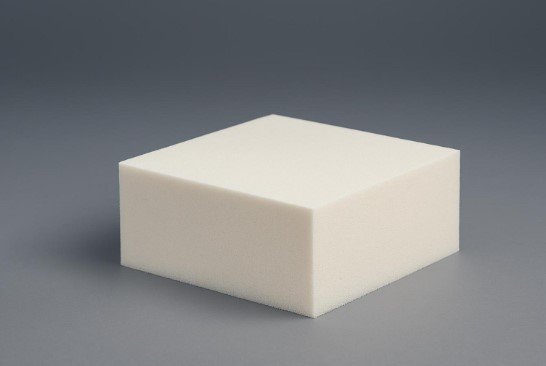
High-quality ROHACELL foam helps create lightweight engineering solutions by acting as an ultra-rigid polymethacrylimide (PMI) core. It separates structural stiffness from total part weight, handles high autoclave consolidation pressures without cell collapse, and limits extra weight caused by uncontrolled resin entry. By supporting thin, strong composite skins against local buckling and transferring shear loads between layers, it allows manufacturers to produce complex, near-net-shape composite structures. These structures can improve payload capacity, service life, and operating efficiency in severe thermal and mechanical conditions.
Modern lightweight design involves much more than replacing metal with a lighter material. It requires a production plan that accounts for material behavior during high-temperature curing, resin infusion, and many years of repeated loading. Buying through an authorized ROHACELL foam distributor – Chem-Craft gives structural designers and composite manufacturers access to factory-certified, traceable PMI foam grades that meet strict aerospace, automotive, and industrial requirements.
What Is ROHACELL Foam and Why Does It Support Lightweight Engineering?
ROHACELL is a closed-cell rigid foam made with polymethacrylimide (PMI) chemistry. It was developed for demanding structural work in high-performance composite manufacturing. Its molecular structure provides a very high heat deflection temperature and a consistent cell matrix. Unlike random or chemically blown commodity foams, PMI foam is made through a controlled thermal expansion process. This creates stable mechanical properties in all directions, giving engineers a dependable basis for structural calculations.
Lightweight engineering aims to reduce dead weight while keeping enough strength and stiffness for operating loads. ROHACELL supports this aim through more than its low density. It also offers strong performance during production. Since the foam keeps its shape and compressive strength during high-temperature consolidation, engineers can use accurate skin thicknesses and efficient internal shapes. They do not need to add extra material to offset core deformation.
What Makes High-Quality ROHACELL Different from Conventional Foam Cores?
Common structural foam cores, including cross-linked polyvinyl chloride (PVC), polyethylene terephthalate (PET), and polyurethane (PU), can soften or creep under moderate heat and pressure. High-quality ROHACELL has a cross-linked polymer structure with strong resistance to heat distortion. It can handle processing conditions above 130°C, while specially heat-treated grades can withstand cure cycles from 180°C to 230°C. This heat resistance allows laminators to use high-performance aerospace prepregs that require demanding cure schedules.
Many standard foams also have uneven cell shapes, inconsistent density, and irregular cell-wall thickness. These differences can create weak areas. ROHACELL is made to tight production tolerances, giving the sheet a uniform microcellular structure. This consistency reduces internal stress points, spreads loads evenly during shear and compression, and limits resin pooling during vacuum-assisted infusion or out-of-autoclave consolidation.
How ROHACELL Foam Works in Composite Sandwich Structures
A composite sandwich structure works much like a classic structural I-beam. The thin outer skins, usually made from carbon fiber reinforced polymer (CFRP) or glass fiber reinforced polymer (GFRP), act as the beam flanges. They carry most of the tensile and compressive bending loads. ROHACELL acts as the web by holding the two skins apart at a fixed distance. This increases the section’s moment of inertia without adding much weight.
The core also needs enough shear stiffness and strength to move loads between the upper and lower skins without internal shear failure or delamination. ROHACELL helps protect thin laminate faces from out-of-plane wrinkling, local dimpling, and overall shear buckling. Since the foam provides continuous support in all directions, designers can reduce skin thickness while limiting the risk of early compression failure.
Which Material Properties Make ROHACELL Foam Suitable for Demanding Designs?
High-demand parts face multi-directional stresses, sudden impact loads, and severe environmental conditions. A structural core must balance many physical and chemical properties to work reliably in these settings. ROHACELL combines heat resistance, dimensional control, and viscoelastic behavior in a way that separates it from most other polymer foam types.
PMI foam can maintain predictable mechanical behavior across a wide operating temperature range, from cryogenic launch vehicle tanks to hot, high-friction aerodynamic surfaces. These properties can reduce the need for heavy edge closeouts, internal metal brackets, and thick adhesive fillets. The result is a cleaner and lighter part from early design through production.
Temperature Resistance Supports Elevated-Temperature Processing
Many industrial core materials place tight limits on manufacturing temperature. This can force processors to use low-temperature epoxy systems that increase cycle times and lower the glass transition temperature (Tg) of the finished part. High-grade ROHACELL formulations, including the WF, HERO, and XT-HT series, remove much of this limit. They support curing up to 180°C at pressures as high as 0.7 MPa. Specialty grades can also handle pressureless post-cures up to 240°C with high-temperature bismaleimide (BMI) and cyanate ester resin systems.
This higher temperature range helps prevent thermal damage, gas release, and chemical softening when the core is exposed to the heat produced by thick composite laminates. Engineers can use one-stage co-curing for complex parts, curing skins, stiffeners, and core in a single cycle. This shortens the production process and can improve bonding between the layers.
Dimensional Stability Improves Manufacturing Accuracy
During autoclave or heated press molding, differences in thermal expansion between the tool, composite skins, and core can create parts outside tolerance, warped shapes, or trapped internal stress. ROHACELL has a low, even coefficient of thermal expansion. The core expands and contracts in a predictable way, reducing the chance of buckled fibers or distorted cured profiles.
Compressive creep also matters. ROHACELL grades commonly show less than 3% compressive creep deformation under sustained consolidation pressure at peak cure temperatures. By keeping its dimensions during combined heat and compression, the core helps maintain the intended fiber volume in the composite skins. This limits fiber wash and supports sharp aerodynamic and mechanical tolerances.
Fatigue Resistance Supports Long Service Life
Parts such as aircraft wings, wind turbine tips, high-speed rail bodies, and automotive suspension links may face millions of repeated stress cycles during service. Many structural cores lose strength quickly under repeated shear loads. Small cracks can form in their cell walls and eventually cause sudden core shear failure.
Independent research indicates that, under shear fatigue, ROHACELL sandwich cores can often carry loads up to 58% of their static failure limit while maintaining a high fatigue life compared with cross-linked PVC and linear PEI. Its fully cross-linked rigid polymer network resists small cracks caused by continuous vibration. This raises the fatigue limit of sandwich structures and lowers risk in parts that face repeated dynamic loads.
Impact and Compression Performance Protects Composite Parts
Composite sandwich panels can suffer low-speed impacts from dropped maintenance tools, runway debris, or hail. ROHACELL absorbs some of this energy by spreading impact waves across a wider section of the core. This limits the local punch-through damage that can crush the skin and shear the core near the impact site.
In Charpy impact tests using CFRP skins, high-performance ROHACELL cores have shown energy absorption of up to 11.91 kJ/m² when struck through the laminate surface. This is higher than results commonly reported for traditional balsa and aramid honeycomb options. Its balanced compressive strength helps prevent core crushing beneath fasteners and other load-entry points, helping the part keep its shape after a local impact.
How High-Quality ROHACELL Foam Reduces Weight Without Sacrificing Strength
Lightweight engineering depends on specific properties: strength and stiffness measured against density. A material that weighs little but has low mechanical performance may need a large cross-section to carry working loads. That can remove much of its weight advantage. ROHACELL addresses this issue by providing very high specific shear and compressive performance for a commercial structural foam core.
With PMI foam cores, available from specialist suppliers such as Chem-Craft, designers can match the performance of solid metal plates or dense composite layups while cutting total component weight by 40% to 70%. This large reduction in dead weight can improve payload capacity, fuel use, and vehicle response throughout service.
High Strength-to-Weight Ratio Improves Structural Efficiency
ROHACELL comes in a controlled range of nominal densities, from ultra-light grades of about 30 kg/m³ to high-density versions above 200 kg/m³. Across this range, compressive strength rises from about 0.4 MPa to more than 7.2 MPa. Shear strength ranges from 0.5 MPa to 5.2 MPa. This selection allows engineers to match the core to the main stress in each load area.
At equal densities, these specific properties are higher than those of alternatives such as PET or PVC. A designer can often choose a lower-density ROHACELL grade while carrying the same shear or compression load. Removing even 20 to 30 kg/m³ from the core of large wing skins, rotor blades, or transport panels can create total savings of hundreds of kilograms per vehicle.
High Stiffness Improves Bending and Buckling Resistance
Flexural rigidity in thin-walled structures rises quickly as core thickness increases. This follows the cubic effect of the distance from the neutral axis. ROHACELL provides high tensile and shear moduli, with tensile modulus values reaching 389 MPa in dense grades. It can add high bending stiffness without a matching increase in weight.
This stiffness across the thickness is needed to prevent overall and local buckling in sandwich panels under compression. Thin skins under heavy in-plane compression tend to buckle into or away from the core. ROHACELL provides continuous support like an elastic foundation. This increases the critical buckling load of the face sheets and allows the use of thin, strongly oriented structural plies.
Closed-Cell Structure Limits Moisture Absorption
Environmental moisture can create a hidden weight problem in lightweight design. Open-cell foams, porous cores, and damaged honeycomb cells can absorb water through capillary action or condensation. Over many years, this adds unwanted weight. In cold or high-altitude conditions, trapped water can freeze, expand, and separate the outer composite skins from the core.
ROHACELL has a 100% closed-cell microstructure that blocks fluid movement through the cell network. Water cannot pass continuously through the core, which limits long-term moisture intake. Small amounts of moisture may slowly move through the polymer under prolonged humid conditions, but the lack of open channels prevents large-scale water storage. This helps preserve lightweight design limits over many years.
How ROHACELL Foam Improves Composite Manufacturing
Laboratory material data has little value if a material cannot be processed reliably in a commercial factory. ROHACELL supports many composite production methods because it remains chemically and mechanically stable during fabrication. It works as a structural core and as a dependable aid during part production.
PMI foam does not need complex edge stabilization or unusually delicate handling. Production teams can experience fewer rejected parts, shorter tool cycles, and simpler quality checks. This processing behavior helps connect detailed CAD designs with repeatable composite parts on the factory floor.
Compatibility with Carbon Fiber and Glass Fiber Skins
ROHACELL works with most modern thermoset and thermoplastic matrix systems, including epoxy, vinylester, phenolic, cyanate ester, and bismaleimide resins. Its clean, low-outgassing cell walls form stable mechanical and chemical bonds with these systems. They do not damage curing agents or disrupt the resin’s polymerization process.
With carbon or glass fiber fabrics, ROHACELL acts as a neutral substrate. It avoids the galvanic corrosion problems that can occur when metal honeycomb cores sit against carbon fiber skins. This compatibility removes the need for insulating barrier plies, which saves weight and makes the laminate layup simpler.
Supports Autoclave, Press, and Out-of-Autoclave Processing
High-quality PMI foam works with several production methods. These include high-pressure autoclave consolidation, usually at 0.3 to 0.7 MPa and 180°C, rapid compression press molding, liquid resin infusion such as VARTM, and out-of-autoclave (OOA) vacuum-bag-only prepreg curing. Its resistance to compressive creep allows laminates to cure under hydraulic or pneumatic pressure without the core collapsing.
ROHACELL also supports single-shot co-curing. Dry or prepreg skins, structural adhesive films, and the machined core can be placed in a mold and cured together in one autoclave cycle. This removes the separate bonding, secondary curing, and stabilization stages often needed with honeycomb cores. The result can be fewer production hours and lower tooling costs.
Machining and Forming Enable Complex Geometries
Modern aerodynamic and hydrodynamic parts often have smooth organic shapes, compound curves, and areas with different thicknesses. These forms can be difficult to make with rigid or brittle materials. ROHACELL can be CNC-machined with standard high-speed cutting tools to close geometric tolerances. It produces clean surfaces with little burring, tearing, or cell-wall crushing.
PMI foam also has strong thermoforming capability. When heated above its glass transition temperature, usually between 180°C and 220°C depending on grade, the sheets become flexible enough to form over male or female molds. They can take on three-dimensional shapes such as spheres, multi-axis curves, and tight-radius leading edges. After cooling, the material keeps its new shape and mechanical properties, with very little spring-back stress in the finished part.
Consistent Cell Structure Improves Part Quality
During resin infusion, the core’s surface determines how much resin enters the bonding interface. With uneven or open-pore materials, liquid resin can run far into internal spaces. This adds unwanted dead weight and changes the planned fiber-to-resin ratio in the nearby skins.
ROHACELL addresses this issue with fine-cell grades such as RIMA and RIST, which have carefully controlled cell sizes. Resin fills the cut cells exposed at the machined surface and creates a dependable mechanical bond. The closed internal structure limits further resin movement. This predictable resin uptake helps final component weights stay close to FEA estimates, often within fractions of a percent.
How ROHACELL Foam Improves Performance Beyond Weight Reduction
Lower mass is the main reason engineers use ROHACELL, but the foam also provides benefits that support reliability, passenger comfort, and life-cycle cost. Looking only at saved grams does not show the full effect of this core material in multi-use structural systems.
Modern efficient vehicles must carry loads, reduce sound, limit heat transfer, and handle constant vibration at the same time. ROHACELL can help with each of these tasks, allowing a passive structural part to provide several functions at once.
Increases Fuel Efficiency and Operating Range
In aviation, shipping, and road transport, every kilogram removed from vehicle tare weight reduces the work needed to move the vehicle. In electric vehicles and hybrid aircraft, battery energy density remains a major design limit. Lowering mass is one of the main ways to extend range without making the battery pack larger.
Replacing heavier cores or metal subassemblies with ROHACELL composite structures can reduce rolling resistance, lift-related aerodynamic drag, and inertial mass. This may lower fuel use per passenger-kilometer or extend battery range. It also helps operators meet strict international carbon limits.
Improves Payload Capacity and Energy Efficiency
In transport systems with a fixed operating range, lower structural tare weight can create a direct increase in payload. Freight aircraft, launch vehicles, light rail trains, and marine ferries can carry more cargo or passengers on each trip. This can increase revenue on every run.
This effect is especially clear in space launch systems. Placing mass into orbit can cost thousands of dollars per kilogram. Removing weight from fairings, interstages, or solar array substrates leaves more capacity for the useful satellite payload. ROHACELL’s specific stiffness supports the structural margins needed for efficient launch performance.
Reduces Noise and Vibration in Composite Structures
Thin, high-modulus composite skins can produce high-frequency noise and carry vibration through a vehicle cabin. Without internal damping, carbon fiber structures may create loud, resonant spaces that tire passengers and affect sensitive electronics.
ROHACELL’s closed-cell viscoelastic polymer structure acts as an internal cushion for sound and vibration. Some of the energy moving through the outer skins becomes small amounts of heat within the polymer cell walls. This reduces structural vibration, lowers resonance, and limits airborne sound transmission without adding heavy acoustic blankets.
Reduces Maintenance Demands Over the Product Life Cycle
Composite repairs can be expensive, labor-intensive, and disruptive to operations. Honeycomb panels often allow moisture to enter through fastener holes. This can corrode aluminum cells or damage aramid cores, leading to skin separation and progressive loss of stiffness. Frequent non-destructive inspections and repeat patch repairs may then be required.
ROHACELL structures avoid many of these problems. The core does not suffer galvanic corrosion, does not support capillary water movement, and has strong fatigue resistance. Parts made with it can remain structurally sound for decades. Fewer inspections and less moisture-related repair work can lower total ownership cost over the vehicle’s service life.
Where Are ROHACELL Foam Lightweight Engineering Solutions Used?
ROHACELL is used in industries where structural failure cannot be accepted and lower weight brings major technical or financial benefits. Engineers select PMI foam when operating demands go beyond what standard materials can handle.
ROHACELL sandwich systems appear in equipment ranging from spacecraft exposed to severe temperature changes to high-speed trains facing strong pressure waves. They are now part of many advanced transport and industrial structures.
Aerospace and Aircraft Interior Components
Commercial and military aircraft use ROHACELL in primary and secondary structures. Exterior examples include wing leading edges, ailerons, elevators, rudders, engine nacelles, landing gear doors, and helicopter rotor blades. Its ability to handle demanding autoclave cycles makes it suitable for flight-critical control surfaces.
Inside aircraft cabins, fire-resistant grades such as ROHACELL S meet strict rules for flammability, smoke density, and toxicity under FAR 25.853. The foam forms the core of lightweight galleys, overhead storage bins, partition bulkheads, and floor panels. These parts combine fire performance with lower weight, helping control aircraft fuel use.
Automotive Body Panels and Structural Components
In hypercars, race vehicles, and luxury electric vehicles, stiffness and low weight affect handling, acceleration, and crash performance. ROHACELL is used in carbon fiber monocoques, body panels, front splitters, rear diffusers, floor structures, and roofs.
Automotive manufacturers also place the foam in structural battery enclosures for electric vehicles. It helps protect the battery from road debris and crash intrusion. It can also act as a thermal barrier that helps isolate and control battery thermal runaway events.
Drones, Satellites, and Spacecraft Structures
Unmanned aerial vehicles and high-altitude, long-endurance drones need high lift-to-drag ratios and enough endurance to remain airborne for days. ROHACELL cores support very light fuselage skins, long wing spars, and antenna windows. This helps keep total takeoff weight within strict limits.
Satellite manufacturers use ROHACELL for solar array substrates, parabolic reflectors, radar domes, and launch vehicle fairings. Its very low dielectric constant and low dielectric loss also make transparent grades such as ROHACELL HF suitable for structural radomes, satellite communication antennas, and millimeter-wave electronic warfare fairings.
Rail, Marine, and Transportation Applications
High-speed passenger trains use lightweight composite structures to reduce axle loads, limit track wear, and support higher travel speeds. ROHACELL is used in the aerodynamic nose cones of these trains. The core must handle sudden air-pressure changes when trains pass each other or enter tunnels at speeds above 300 km/h.
Racing yachts and fast passenger catamarans use PMI foam in decks, hull superstructures, and hydrofoils. Its resistance to water movement and high specific shear stiffness help the hull withstand repeated wave impacts without skin separation or seawater absorption.
How Does ROHACELL Compare with Other Structural Foam Cores?
Choosing a core requires a balanced review of static strength, production needs, long-term durability, and project cost. Structural engineers often compare ROHACELL with established alternatives such as cross-linked PVC, PET, and open-cell honeycomb materials.
Knowing where ROHACELL has a clear advantage, and where another material may work well enough, helps engineering teams use their budgets and materials wisely.
ROHACELL Foam Compared with PVC and PET Foam
Cross-linked polyvinyl chloride is common in marine, wind-energy, and recreational products because it costs less and offers reasonable mechanical performance. However, PVC has a relatively low glass transition temperature, usually from 80°C to 100°C. This limits it to low-temperature wet layups or vacuum infusion with slow-curing resins. At higher cure temperatures, PVC can soften quickly, release plasticizers, and collapse inside an autoclave.
PET foam has gained use because its raw material cost is low and it can be recycled. However, it usually has lower specific shear and compression properties and can suffer permanent creep under long-term loads. PET can work well in building panels and large wind turbine blade shells, but it does not match ROHACELL’s combination of specific strength, low creep, and high-temperature processing range in high-stress, safety-critical parts.
ROHACELL Foam Compared with Honeycomb Cores
Nomex aramid paper and aluminum honeycomb have long been common aerospace core materials. They offer very high compression strength along the vertical cell direction. However, honeycomb cores are strongly directional and provide little support across the sides. The composite skin can remain unsupported over the open cell spaces. This may cause skin dimpling, local micro-buckling, and serious face wrinkling under compression.
Open honeycomb cells can also hold water. A small crack in the outer skin may let water enter, corroding aluminum cells or damaging aramid materials. Manufacturers may then need potting compounds, which reduce the original weight benefit. ROHACELL offers a closed-cell core with similar support in all directions. It supports the skin across the full surface, removes the need for many potting compounds, and greatly reduces the chance of internal water storage.
When Should Engineers Choose ROHACELL for a Lightweight Solution?
Engineers should select high-quality ROHACELL for projects that use high-temperature prepregs, complex three-dimensional surfaces, close geometric tolerances, or long-term exposure to fatigue and moisture. It is especially useful when single-shot co-curing is needed to reduce the number of production stages.
If the main requirement is a thick core at the lowest possible material price, and the part will be made with a low-temperature wet layup, PET or balsa may be enough. However, projects that require repeatable structural margins and very low risk of moisture storage or consolidation creep are better suited to ROHACELL.
What Are the Limitations and Design Risks of ROHACELL Foam?
A sound engineering review must compare the material’s benefits with its design limits and possible risks. Ignoring the physical limits of polymethacrylimide foam can cause production defects, unexpected failures, or excessive project costs.
By identifying these issues during early design and stress analysis, engineering teams can use ROHACELL effectively while avoiding preventable production problems.
Material Cost Can Exceed Conventional Foam Cores
High-purity PMI foam costs more than common structural cores such as cross-linked PVC, recycled PET, and end-grain balsa. Its advanced chemistry, strict quality controls, and controlled thermal foaming process increase the initial sheet price.
Design teams should judge this cost at the system level instead of comparing only raw material prices on a bill of materials. Lower part weight, fewer bonding stages, no honeycomb edge potting, lower resin uptake during infusion, and fewer warranty claims can reduce the total manufactured cost. In many projects, these savings offset the higher starting price of the core.
Incorrect Density Selection Can Reduce Structural Performance
Choosing a core density only to reduce weight, without studying the main failure modes, creates a serious design risk. PMI foam follows different scaling behavior under different loads. Tensile properties generally rise in proportion to relative density, while compression and shear limits depend on buckling inside the small cell walls. These limits can fall quickly at lower densities.
For example, changing from a 110 kg/m³ core to a 52 kg/m³ core may change the main failure mode. A part that once failed through safer ductile core shear could instead experience sudden face-sheet wrinkling or core crushing across the thickness. Finite element models must account for these changes and match core density to shear spans and compression zones.
Core-to-Skin Bonding Requires Controlled Processing
ROHACELL’s closed-cell structure limits deep resin entry, but a strong bond with high peel strength still requires careful processing. Cutting lubricants, release agents, or CNC dust on the bonding surface can cause separation between the core and skin during repeated loading.
The surface contains millions of tiny cut cells, so fabricators must set the adhesive film weight or resin flow carefully. Too little adhesive creates a dry boundary layer with poor peel resistance. Too much resin increases finished part weight and works against the original lightweight goal.
Designers Must Verify Temperature, Fire, and Chemical Requirements
ROHACELL has strong heat resistance compared with many other foams, but performance depends on the specific grade. Using an industrial grade such as standard IG-F in a 180°C aerospace autoclave cycle can cause the core to collapse. The exact grade’s processing range must match the cure temperature, pressure, hold time, and resin heat release.
Environmental and regulatory performance also varies across the product range. Grades such as ROHACELL S have certifications for aircraft interior flammability and smoke generation, but standard structural grades do not automatically meet FAR or railway fire-safety rules. Designers must review chemical exposure as well. Strong solvent vapors or amine curing agents may damage cell walls during production or field maintenance.








Discussion about this post