

Receipts pile up faster than anyone can sort them. Most owners know the feeling. Bookkeeping eats hours that should go to customers, products or sleep. Before you compare bookkeeping outsource services, you need one answer: which tasks can you hand over, and which decisions stay with you?
Think of it as a division of labour, not a surrender. Your provider does the sorting. You make the calls. This guide walks through where that line sits, the way I’d explain it to a client over coffee.
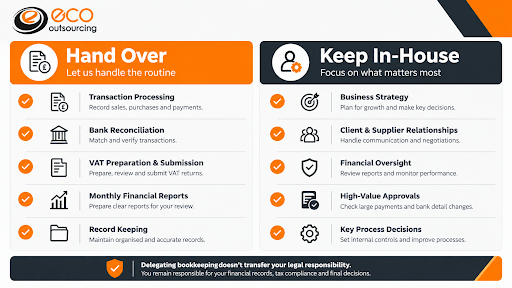
What Can You Outsource?
Plenty of bookkeeping is repetitive. That’s exactly why it works well with an outside provider.
Recording Sales and Purchases
Every sale, supplier invoice and expense needs the right category and a matching document. A good provider records these and flags anything missing. Miss a supplier bill in week one, and you’ll catch it quickly. Miss it at year-end, and you’ll be digging through old emails.
Bank and Card Reconciliations
Why bother reconciling if the software imports everything automatically? Because imports make mistakes. A payment can appear twice. A deposit can match the wrong invoice. Reconciliation finds these errors while they’re still cheap to fix.
Records Keeping and Month-End Reporting
Your provider maintains updated records and keeps track of who owes you money. At the end of the month they work on profit and loss statements, balance sheets, and cash flow reports. However, the value of these documents depends on someone reading them which falls to you.
VAT and Year-End Support
Some providers prepare VAT figures or draft returns. Others hand the file to your accountant. Preparing figures, reviewing them and submitting a return are three separate jobs. Your agreement should name who does each one.
What Should You Keep?
Handing over the work doesn’t mean handing over control. You or an authorised manager should keep hold of the decisions that carry the most risk.
Approving Payments
Let your provider draft the payment run. A senior person should release the money. Any change to a supplier’s bank details also needs a separate check. That one step stops the fraudster who sends a convincing “new account” email.
Making Business Decisions
Spending, borrowing and cash-flow priorities stay with you. A bookkeeper can show the numbers and point out risks. They shouldn’t decide whether you take on a loan or hire someone.
Supplying Accurate Information
The provider can only operate based on the information that you provide. All atypical transactions must be justified with clarity. Issues left unanswered for three weeks go unanswered forever, as no one remembers the details.
Reviewing Reports
Take a look at the monthly reports composed of income, expenses, and cash balances. If something came as a surprise to you, inquire about it. Agree beforehand who will check for errors, and who will give approvals before changes are made.
Managing Compliance
Transferring responsibility does not transfer liability. Taxes, obligations, and responsibilities still belong to the business. Find out what the service provider will do and what you will still have to do.
The Responsibility Checklist: Who Does What?
Use this table as a starting point. Then agree to the final split in writing before work begins.
| Task | Bookkeeper’s role | Owner’s role | Approval or review |
| Recording sales and expenses | Record and categorise | Provide complete documents | Review exceptions |
| Bank reconciliation | Match records to statements | Explain unknown transactions | Investigate differences |
| Supplier invoices | Record bills, flag queries | Confirm unusual purchases | Approve payments |
| Payment runs | Prepare payments if agreed | Authorise payments | Verify sensitive changes |
| VAT records | Maintain records, prepare figures | Provide accurate information | Agree who reviews and submits |
| Month-end close | Reconcile and prepare reports | Answer open queries | Review material discrepancies |
| Year-end handover | Organise records and reconciliations | Confirm missing information | Agree with the accountant |
This table isn’t a legal allocation of duties. Your contract and your obligations set the final split.
Protecting Your Money and Records
Giving an outside firm access to your accounts carries real risk. A few habits keep that risk small.
Limit Access
Assign a unique login to each individual but make sure that they do not share passwords with anyone else. Let users have privileges just for the tasks that one will be executing and examine them regularly, say every few months. In case the person stops working for the supplier, it should be terminated right away.
Separate Preparing From Approving
The person who prepares a payment shouldn’t release it. Verify bank detail changes by calling a number already on file. Never reply to the email that asked for the change.
Set a Reporting Rhythm
Decide how often reconciliations and reports happen. Set deadlines for the documents you owe. A written schedule prevents arguments later.
What to Give Your Bookkeeper Before They Start?
Good onboarding saves weeks of back-and-forth. Gather these before day one:
- Accounting software access, with agreed permissions
- Bank and credit card statements
- Sales invoices, supplier bills and expense receipts
- Opening balances and existing records
- Previous reconciliations and open queries
- VAT registration details and filing dates
- A list of unresolved transactions and missing documents
If Your Books Are Already Behind
The one-size-fits-all approach does not apply to the particular business model. When an entrepreneur relies on an in-house bookkeeper to manage his company’s accounts, there may be delays in bookkeeping since the entrepreneur is often heavily occupied with important matters.
In this connection, outsourcing is preferred by the entrepreneur. The bookkeeping company provides all essential services, including preparing financial statements. The same holds true for COOs who hire freelancers to take care of accounting.
What Belongs in the Agreement?
A contract safeguards both parties. State the services covered and clarify if VAT, payroll and year-end assistance are included in price or not. Compare charges on a fixed monthly basis to hourly rates and figure out the deadlines for reporting. Clarify how errors can be registered and rectified. Ensure that you are able to transfer your data in case you decide to change the service.
How Much Should You Outsource?
A specific model does not fit all kinds of businesses. The small business owner uses an internal bookkeeping staff member to handle simple books but when the business owner gets busy, records are delayed.
Outsourcing is commonly a preferred alternative for growing businesses. While handling all regular activities of bookkeeping, the service provider can do reports and accounting, which require inputs and approvals from the client. In a similar situation, people hire freelancers, who cost less, but often take holidays without providing coverage for them.
When you weigh bookkeeping outsource services against these options, look past the monthly fee. Compare total cost and service scope instead.
Common Mistakes to Avoid
Allowing too much access too fast. Start off limited and expand access when there is a clear justification for it.
Underestimating the role of the software. While automated imports relieve some of the burden, there is still a need for manual verification.
Failing to clearly define the division of responsibilities. Having written agreements on the area of responsibilities helps avoid disputes arising from lost documents or missed deadlines.
Hiring solely based on the price. Factors such as scope, verification process, and reporting are more important than the price itself.
Disregarding the reports. Spend just fifteen minutes per month to check the biggest figures available. Keeping this habit will help deal with most problems on time.
Frequently Asked Questions
What bookkeeping duties should I delegate first?
You should start with the tasks that are repetitive in nature such as ensuring the recording of transactions and performing reconciliations. It is these types of jobs that take the most time and have a routine nature making them perfect candidates for outsourcing.
Can I allow an outsourced bookkeeping expert access to my business account?
You should provide him/her with view-only access or limited permissions on it if you can. All duties that involve spending money should be performed by someone from your company as this is a different job than preparing money transfers.
Is it possible to hire an offshore bookkeeper while keeping a local accountant?
It is possible to do so. The two can cooperate effectively if clear responsibilities are established. The parties should agree at the start who will prepare what reports, and at what time.
What happens if an offshore bookkeeper makes a mistake?
The contract must contain the answer to this question. Usually, the bookkeeping company will fix the mistake made by them, and you will make sure that this dealt with your balance.
How can I check that my outsourced bookkeeping is accurate?
Ask for regular bank reconciliations, supporting evidence for key entries and exception reports. Then review the monthly reports yourself, focusing on income, costs and cash balances.
Conclusion:
Bookkeeping can be delegated to a specialist while keeping control of the decision-making process. As you sign contracts with a company that offers bookkeeping services, make sure you clear out all the details, such as accessibility, tasks, and reporting timetable.
It’s best to have the checklist with you when meeting the pros for the first time. Would you like to find out how this process works for your organization?Contact Eco Outsourcing and we will be glad to help.









Discussion about this post