

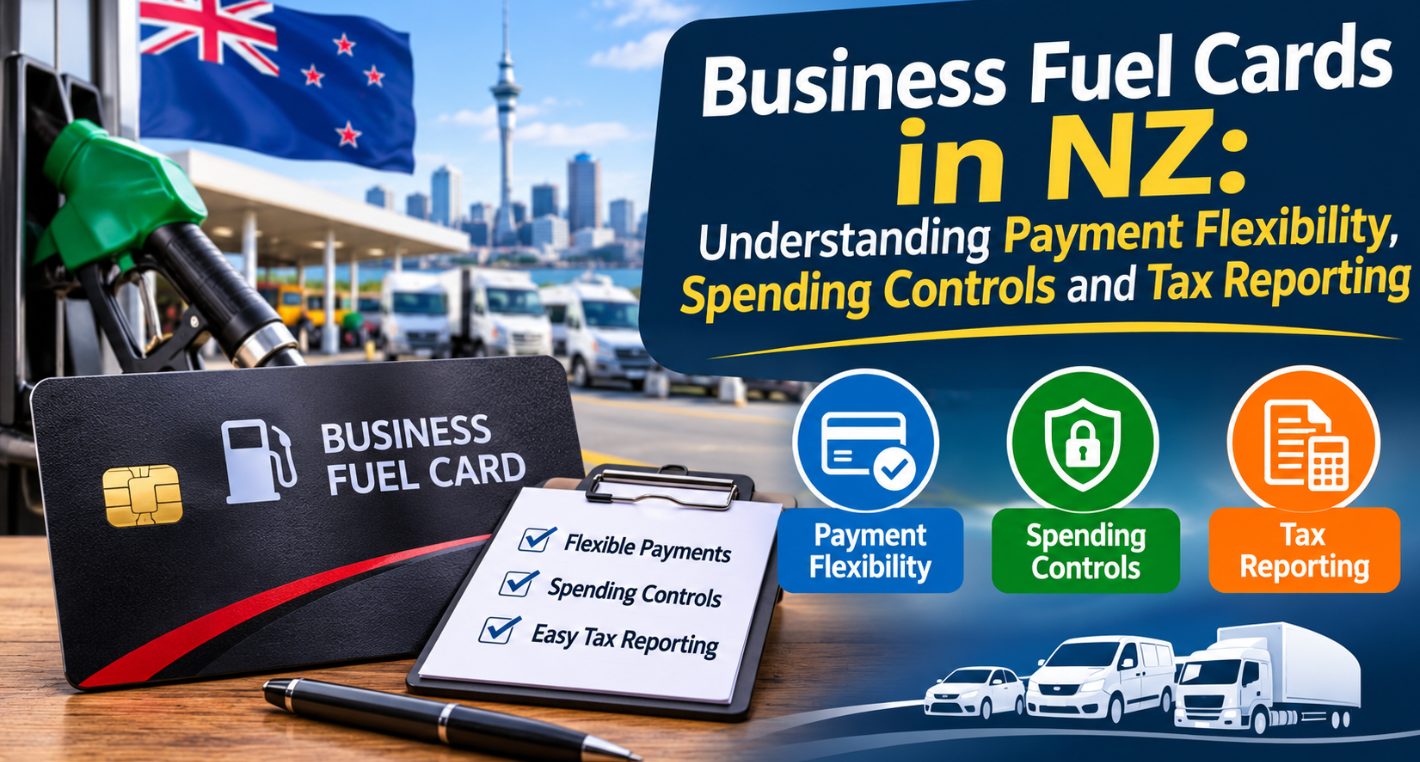
I run fuel spending for a small delivery fleet, and I used to dread month end. Paper dockets went missing in glove boxes. Drivers forgot to write down odometer readings.
My accountant rang me three times just to find missing GST invoices. Then I switched to business fuel cards in NZ, and most of that mess stopped. Every fill up now lands in one dashboard, GST already split out. New Zealand pump prices carry close to 49 percent in taxes and levies, so getting that number right actually matters at tax time, not just for tidy books.
What A Fuel Card Actually Pays For
A fuel card is not magic plastic. It is a payment account tied to your business, not your personal bank account. Every swipe gets logged against a driver, a vehicle, and a job code. I stopped guessing which ute burned through diesel fastest, because the data sat right there in front of me. Regular 91 petrol averaged close to 297 cents a litre in 2026, and diesel sat near 267 cents a litre. Multiply that across ten vehicles and you see why loose tracking gets expensive fast.
Payment Flexibility That Actually Helps
Good cards let you set limits by litre, by dollar, or by day. I run one driver on a strict 80 litre weekly cap and another on an open account, because his delivery route changes daily. Some cards also work across several fuel brands, not just one chain. That matters out in regional New Zealand, where one brand might not have a station for 200 kilometres.
Spending Controls That Stop The Leaks
This is the part I actually care about. A fuel card with no controls is just a credit card with extra steps.
- Lock purchases to fuel and oil only, not snacks or tyres
- Set a daily litre cap on every vehicle
- Require a PIN tied to the driver, not the car
- Get a text alert the moment a purchase crosses your set limit
- Block weekend or after hours purchases if your fleet doesn’t run then
GST And Tax Reporting Made Simple
New Zealand charges GST at 15 percent, and it sits inside the pump price already. A proper fuel card statement pulls that 15 percent out automatically, so your accountant isn’t stuck working through forty blurry docket photos. I hand mine one monthly export now instead of a shoebox of receipts.
Fuel Cards And Fringe Benefit Tax
This bit trips people up constantly. If a fuel card tops up a vehicle that already attracts fringe benefit tax, Inland Revenue does not tax the fuel again on top, since it is already built into that vehicle’s FBT value. But hand an employee a card for their own personal car, and let it cover private trips too, and FBT can land on that extra private portion. I keep business cards and personal fuel completely separate for exactly this reason. One card, one purpose, fewer surprises at FBT return time.
How The Main Card Features Compare
Here is the short version I wish someone had handed me on day one.
| Feature | Why It Matters | Who Needs It |
| Litre caps | Stops one driver blowing the monthly budget | Fleets with mixed vehicle sizes |
| Multi brand acceptance | Keeps vehicles moving in remote areas | Rural and inter regional routes |
| PIN per driver | Ties every purchase to one person | Any fleet with two or more drivers |
| GST breakdown | Cuts accounting time at return time | Every GST registered business |
| Real time alerts | Catches misuse the same day, not next month | High value or high risk fleets |
I didn’t fix my fuel spending by working harder. I fixed it by moving the whole job onto a system built for exactly this, and letting the controls do the watching for me.







Discussion about this post