

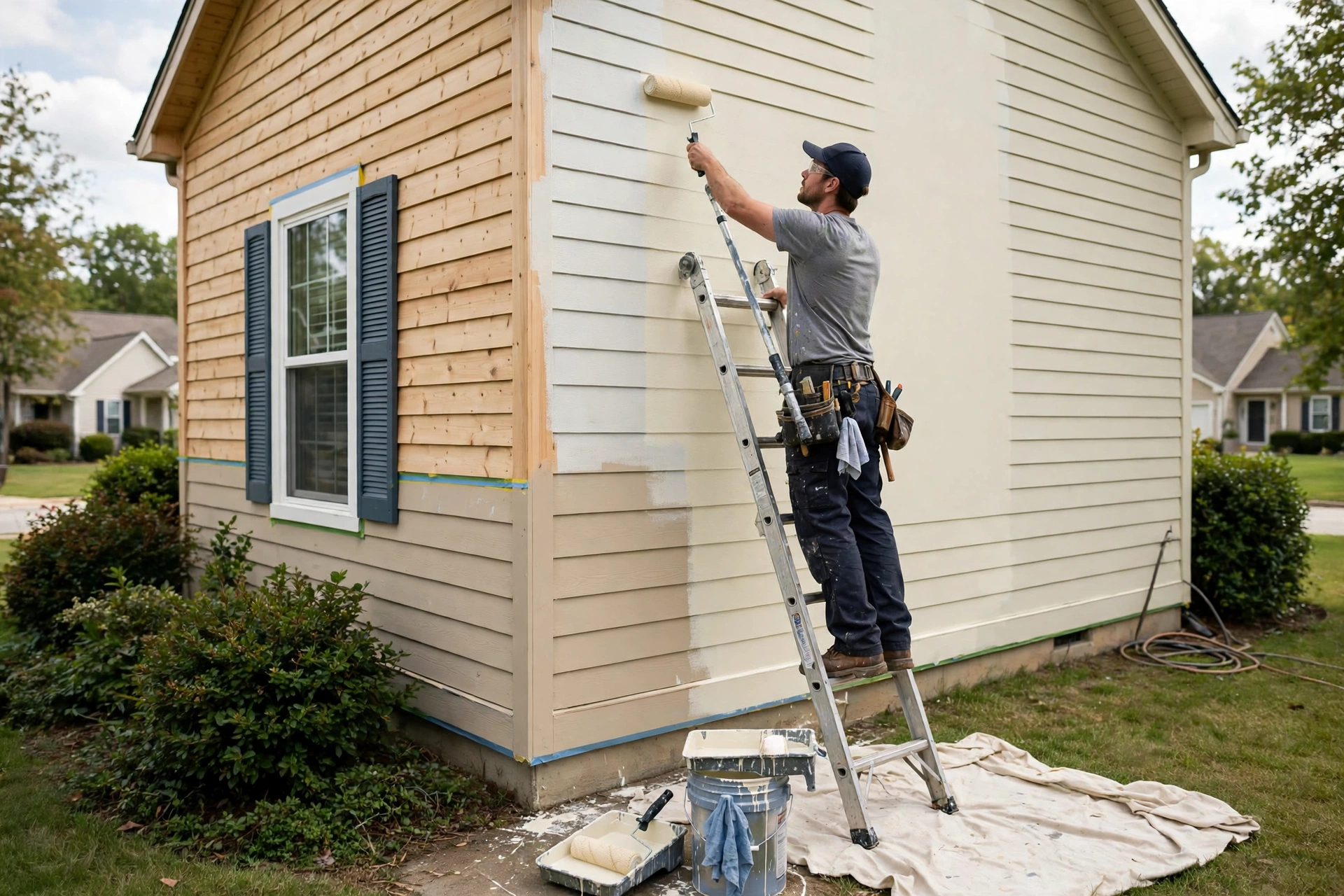
A fresh coat of paint can completely change how your home looks. That faded siding suddenly feels new again, the front porch looks more inviting, and the whole house gets a cleaner appearance. But exterior painting isn't as simple as picking a color and grabbing a brush.
There's more to consider than you might expect. Weather conditions, surface preparation, paint quality, and even the condition of your home's exterior can affect the final result.
What to Consider Before Painting Your House Exterior
Exterior painting requires careful planning because outdoor surfaces face constant exposure to sunlight, rain, moisture, and changing temperatures.
If you're planning to refresh your home's exterior, consider hiring professionals offering exterior house painting services to ensure proper preparation, suitable materials, and a quality finish.
Here are some important factors to keep in mind.
1. Check the Condition of Your Exterior Walls
Before choosing paint colors, take a close look at the surfaces you plan to paint.
Peeling paint, cracks, mildew, and damaged siding can affect how well new paint adheres. Painting directly over these problems may lead to premature peeling or an uneven finish.
Walk around your home and inspect areas near windows, doors, gutters, and shaded walls where moisture problems may be more noticeable.
If you find damaged wood, loose siding, or signs of water intrusion, address those issues before painting.
If you notice extensive damage or aren't sure what repairs are needed, consider consulting an experienced residential painting company to assess the surfaces and recommend the necessary preparation.
2. Choose the Right Time of Year
- Weather plays an important role in exterior painting.
- Extremely hot temperatures can cause paint to dry too quickly, while cold or damp conditions may interfere with proper drying and curing.
- Rain can also damage freshly applied paint, especially before it has had enough time to dry.
- Check the manufacturer's recommended temperature and humidity conditions before starting.
- For many exterior paints, mild weather with limited rain and manageable humidity provides suitable working conditions.
3. Select Paint Suitable for Your Exterior Surface
Not every paint works on every surface.
Wood, brick, stucco, concrete, and vinyl siding have different requirements. Choosing the wrong product can affect adhesion, appearance, and durability.
For example, exterior acrylic latex paints are commonly used on many residential surfaces because they offer flexibility and weather resistance.
However, some surfaces may require specialized coatings or primers.
Always check whether the paint is compatible with your home's exterior material.
4. Don't Skip Surface Preparation
- Surface preparation is one of the most important parts of exterior painting.
- Even high-quality paint may fail prematurely if applied over dirt, loose paint, or damaged surfaces.
- Proper preparation generally involves:
- Cleaning away dirt, dust, and mildew
- Scraping loose or peeling paint
- Sanding rough edges where appropriate
- Repairing cracks and damaged areas
- Caulking suitable gaps around windows and trim
- Applying primer where needed
- Allow surfaces to dry properly before applying paint.
If your home was built before 1978, be aware that existing paint may contain lead. Disturbing it can create hazardous dust, so follow applicable lead-safe renovation requirements.
5. Think Carefully About Your Color Choices
- Choosing exterior paint colors involves more than personal preference.
- The color should complement your roof, landscaping, architectural style, and surrounding features.
- Light colors can create a bright, open appearance, while darker shades may highlight architectural details.
- However, darker colors can absorb more heat, which may affect certain siding materials.
Before committing to a color, test samples on different areas of your home. Observe them during the morning, afternoon, and evening to see how lighting changes their appearance.
6. Understand the Importance of Primer
- Primer helps create a suitable surface for paint adhesion and can improve coverage.
- It is particularly useful when painting bare wood, repaired areas, or surfaces with significant color changes.
- Some exterior paints include primer-like properties, but that doesn't mean a separate primer is never needed.
- The right approach depends on the surface condition, existing coating, and paint manufacturer's instructions.
- Skipping necessary primer can lead to uneven coverage or premature paint failure.
7. Estimate the Amount of Paint Needed
- Running out of paint halfway through a project can delay the work and create unnecessary inconvenience.
- To estimate how much paint you'll need, measure the approximate surface area and account for windows, doors, and other openings.
- Remember that rough or porous surfaces may require more paint than smooth surfaces.
The number of coats also matters. Many exterior painting projects require two finish coats, although the exact requirements depend on the product and surface.
Check the paint manufacturer's coverage recommendations before purchasing materials.
8. Decide Whether to DIY or Hire Professionals
Painting a small, accessible area may be manageable as a DIY project. However, painting an entire house can be physically demanding and time-consuming.
- Multi-story homes, damaged siding, difficult-to-reach areas, and extensive preparation may require professional equipment and experience.
- Before hiring a contractor, ask about their experience, insurance, preparation methods, materials, and project timeline.
- A written estimate should clearly explain the scope of work, including surface preparation, repairs, paint application, and cleanup.
Common Exterior Painting Mistakes to Avoid
- Even a well-planned project can run into problems when important details are overlooked.
- Some common mistakes include:
- Painting over damaged surfaces: Trapped moisture and loose paint can cause the new coating to fail.
- Ignoring weather conditions: Rain, excessive heat, or high humidity can affect application and drying.
- Using the wrong paint: Interior paints or incompatible coatings may not withstand outdoor conditions.
- Skipping necessary primer: Bare or repaired surfaces may develop uneven coverage or adhesion problems.
- Rushing between coats: Applying another coat too soon can interfere with proper drying.
- Avoiding these mistakes can help improve the appearance and longevity of your exterior paint.
Final Thoughts
Knowing what to consider before painting your house exterior can make the entire project easier to manage.
From checking surface conditions and choosing suitable materials to planning around the weather, every step contributes to the final result.
Take time to prepare your home, compare paint options, and understand the work involved before getting started. Whether you handle the project yourself or hire experienced painters, careful planning can help you achieve a clean, attractive finish that protects your home's exterior for years to come.









Discussion about this post