

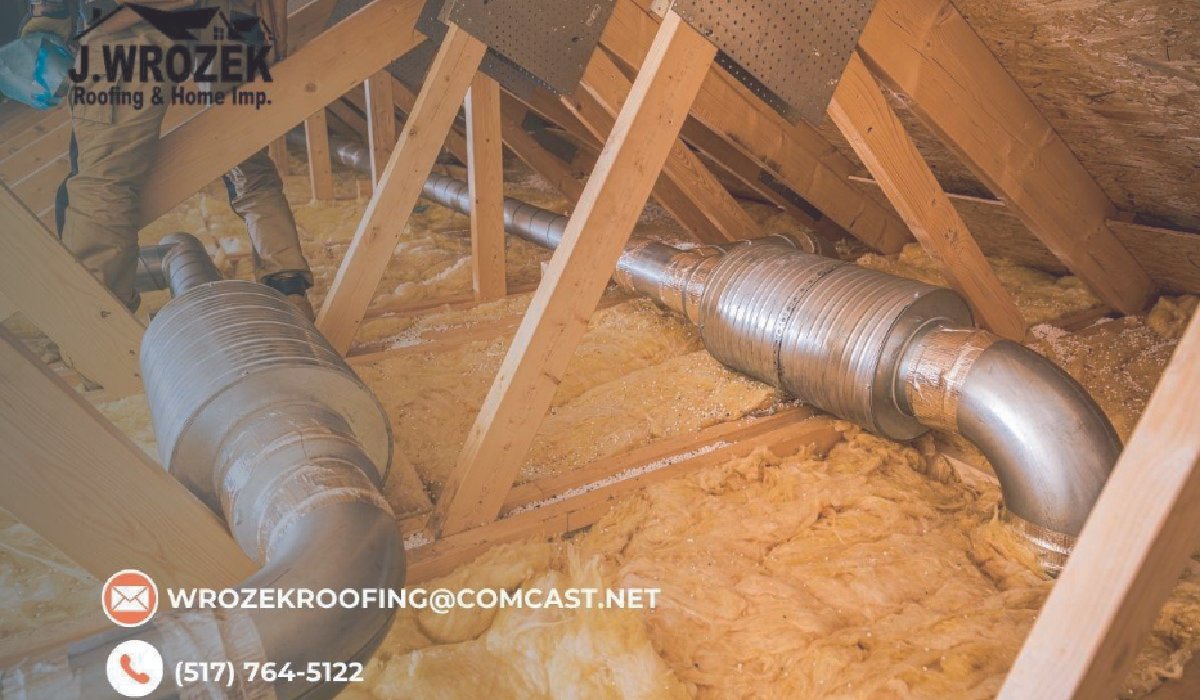
When a roof wears out sooner than it should, most homeowners blame the shingles, the installer or the weather. Sometimes they’re right. But a surprising number of early roof failures start in a place nobody looks at: the attic.
Your attic and your roof work as a system. If the air inside the attic is too hot, too damp or poorly managed, the shingles above it pay the price, often years before their time. Understanding how attic ventilation and roof performance connect can save you from replacing a roof early, and from finding mold in your attic after a long Michigan winter.
How your attic and roof work together
Think of the attic as a buffer between your living space and the weather. In a well-designed home, that buffer stays close to the outside temperature: cold in winter and not unbearably hot in summer. Insulation on the attic floor keeps the heat from your living space where it belongs, and ventilation moves air through the attic so heat and moisture can escape.
When either piece is missing or poorly done, the attic stops behaving like a buffer. It traps heat in the summer and leaks warmth upward in the winter, and both problems wear down the roof from below.
What poor attic ventilation does to your roof
In the summer, a poorly ventilated attic can get far hotter than the air outside. That heat bakes the underside of the roof deck and the shingles above it, drying out the asphalt and accelerating the aging process. Shingles that should last two decades can start curling, cracking and losing granules much earlier.
In the winter, the problem reverses. Warm air from your house rises into the attic, warms the roof deck and melts snow from underneath. The meltwater runs down to the cold eaves, where it refreezes, building up the ridges of ice we call ice dams. Those dams force water back up under the shingles and into your home. This is one of the most common roof ventilation problems in Michigan, and it often gets blamed on the weather alone.
Some shingle manufacturers also tie their warranty coverage to adequate ventilation, so a poorly vented attic can create trouble for your roof warranty on top of everything else. It’s worth checking the warranty paperwork for your specific shingles.
Attic condensation: the hidden moisture problem
Warm air holds more moisture than cold air, and a lot of moisture comes from everyday life: showers, cooking, laundry, even breathing. When that warm, humid air leaks into a cold attic, it meets cold surfaces like the underside of the roof deck and condenses into water droplets. In severe cases, you can see frost on the nails and sheathing in the middle of winter, which melts into dripping water when it warms up.
Attic condensation is easy to mistake for a roof leak. Homeowners see stains on the ceiling or damp insulation and assume the shingles are failing, when the water is actually coming from inside the house. This is why diagnosing the source matters, because patching the roof won’t solve a moisture problem that starts below it.
Mold in your attic: what it means and what to do
Persistent moisture leads to mold. If you find dark, fuzzy or discolored patches on the roof sheathing, rafters or insulation, it’s a sign that humidity or condensation has been building up for some time. Mold in your attic can also damage wood, reduce the effectiveness of insulation and affect the air quality in your home, since attic air does find its way into living spaces.
A small, isolated patch may point to a minor, fixable problem. Widespread growth, a musty smell or soft, damaged wood is a signal to bring in professionals. The mold itself needs to be handled properly, but cleaning it without fixing the moisture source just means it will come back. The real fix is to find out why the attic is damp and correct that.
Signs your attic might be causing problems
Many of the clues show up on the outside or inside of the house. On the roof, look for shingles that are aging unevenly or faster than expected, ice dams along the eaves in winter or snow that melts unevenly on the roof. In the attic, look for frost on the nails, damp or compressed insulation, dark stains on the wood, a musty odor or rooms below that are very hot in summer and drafty in winter. Inside the house, ceiling stains that appear in winter and dry out later often point to condensation or ice dams rather than a broken shingle.
If you go into your attic to check, be careful where you step, since the ceiling below won’t support your weight between the joists, and wear a mask if you suspect mold.
How ventilation is supposed to work
A well-ventilated attic needs two things working together: air coming in low and air going out high. Intake vents, usually in the soffits under the eaves, let cooler outside air in. Exhaust vents, typically at or near the ridge of the roof, let warm, moist air out. As warm air rises and escapes at the top, fresh air is drawn in from below, creating a steady flow.
A common guideline is about one square foot of net free vent area for every 150 square feet of attic floor, or one for every 300 when the system is balanced between intake and exhaust and the ceiling below has a vapor barrier. Local building codes and the attic’s design determine the exact requirement for your home, so the numbers on your house may differ.
Several things can go wrong. Insulation can be blown or stuffed over the soffit vents, blocking the intake. Too many different kinds of exhaust vents can short-circuit the airflow so that part of the attic never gets fresh air. And bathroom fans that vent into the attic instead of outside pump moisture right where you don’t want it.
The role of insulation and air sealing
Ventilation gets the attention, but insulation and air sealing are just as important. The goal is to keep heated air in the living space and out of the attic. Michigan homes generally need generous attic insulation, and recommended levels for cold climates are often in the neighborhood of R-49 or higher, though code requirements and best practices change, so check current guidance for your area.
Just as important is sealing the small gaps where warm, moist air sneaks into the attic: around recessed lights, plumbing and wiring penetrations, the attic hatch and the tops of interior walls. Insulation slows heat, but air leaks carry both heat and moisture. A thick layer of insulation on top of a leaky ceiling won’t fix a condensation problem.
When a roof repair service can help, and when it can’t
A roof repair service can fix the damage that poor attic conditions leave behind: curled or cracked shingles, flashing that has failed or leaks along the eaves from ice dams. Those repairs matter, and they can extend the life of the roof in front of you.
But repair alone doesn’t fix the cause. If the underlying attic problems stay in place, the damage returns, often in the same spots. A local roofing contractor will look at the roof and the attic together, tell you whether the ventilation and insulation are contributing and help you decide whether repair, a ventilation upgrade or full replacement is the right next step. In some cases, adding or correcting ventilation during a replacement is one of the most valuable things you can do for the new roof.
Getting your attic checked
If your roof is aging faster than expected, if you’ve had ice dams or if you’ve spotted moisture or mold in the attic, it’s worth having someone qualified take a look at both the roof and the space beneath it. J. Wrozek Roofing & Home Improvement offers roof repair and replacement in Jackson, MI and the surrounding area, and can inspect your roof and talk through whether ventilation may be part of the problem.
Read More: Changeover Alerts and Label Checks: How Food Teams Are Making Allergen Control Feel Easier








Discussion about this post