

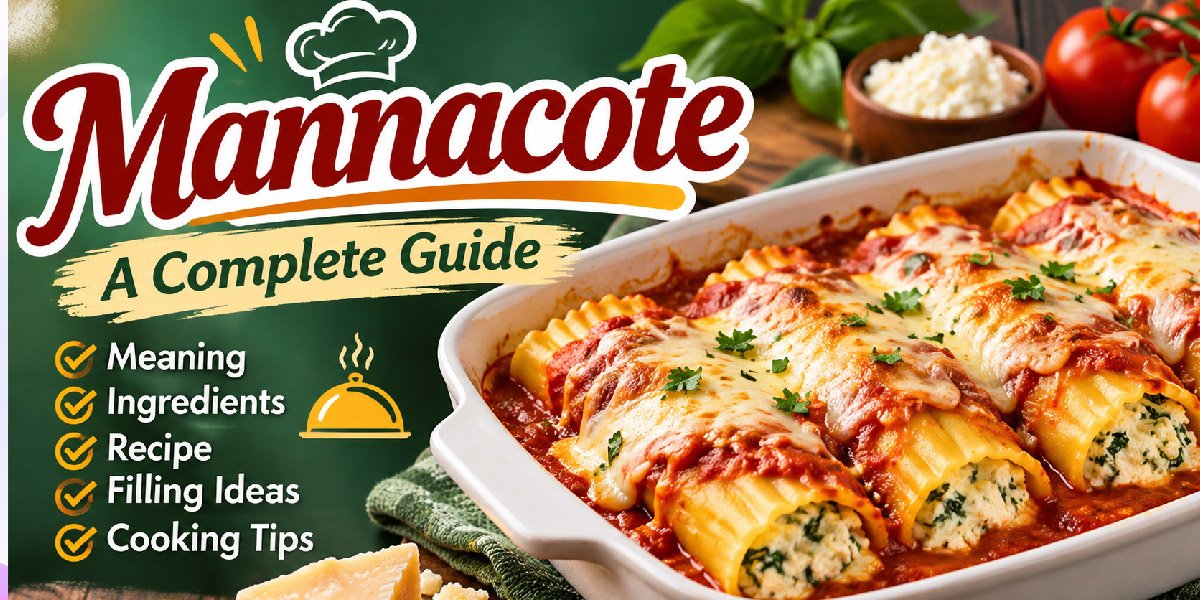
Warm pasta filled with creamy cheese and covered with rich tomato sauce is a classic comfort meal. If you have searched for Mannacote, you may wonder whether it is a special pasta, a traditional Italian recipe, a brand name, or another version of a familiar baked dish.
The answer needs some explanation because Mannacote is not the standard culinary name found in established English definitions of Italian pasta. In food-related searches, the term is closely connected with manicotti, the large stuffed pasta tubes commonly filled with ricotta, cheese, meat, spinach, or other ingredients.
Understanding this difference makes recipes much easier to follow. This guide explains what Mannacote means, its connection with manicotti, the ingredients commonly used, filling and sauce choices, cooking methods, useful variations, storage tips, and another completely different meaning of the similar name outside the kitchen.
What Is Mannacote?
Mannacote is best understood in a food context as an informal spelling or phonetic variation connected with manicotti. Manicotti is a recognized pasta term describing large tubes that can be stuffed with a filling, covered with sauce, and baked until tender.
The traditional-style filling usually centers on ricotta cheese. Mozzarella and Parmesan can provide additional flavor and texture, while egg and herbs may help create a richer mixture. Cheese is common, although spinach, mushrooms, sausage, beef, and other ingredients can also be included.
The important point is that Mannacote should not automatically be presented as an independently established Italian pasta variety. When the word appears in recipes or food discussions, looking at manicotti provides the clearest culinary explanation and a much stronger historical and linguistic foundation.
Why Is Mannacote Connected With Manicotti?
The connection becomes easier to understand when pronunciation is considered. Food names can change as they move between languages, regions, families, and generations. People sometimes learn a dish by hearing its name rather than seeing the correct spelling written on a package or menu.
Italian-American speech provides useful context for this process. Different Italian regional dialects influenced how immigrant families pronounced familiar food words. Final vowels could sometimes sound weak or disappear entirely, creating pronunciations that looked quite different when later written phonetically in English.
For this reason, unusual spellings around Italian-American foods are not surprising. However, there is not enough reliable evidence to claim a specific historic community invented “Mannacote.” It is more accurate to describe it cautiously as an online or phonetic variation associated with manicotti.
What Does the Word Manicotti Mean?
The established word manicotti comes from Italian. Its linguistic roots are connected with manica, meaning sleeve. That description makes sense when looking at the food because manicotti pasta has a long, hollow shape resembling a small sleeve ready to hold filling.
In American English, manicotti describes large tubular pasta or the prepared dish made by stuffing those tubes. Cheese or meat can be placed inside before the pasta is covered with sauce. The complete dish is normally baked and served hot.
This established meaning is useful when researching Mannacote because it separates documented information from creative online explanations. Claims that Mannacote has an ancient independent meaning or represents an unknown historic Italian dish should therefore be treated carefully unless reliable culinary or linguistic evidence supports them.
Is Mannacote an Italian or Italian-American Dish?
The food represented by the Mannacote search term fits most naturally within Italian-American cooking when referring to stuffed manicotti tubes. Manicotti became strongly associated with American Italian cuisine, where large pasta tubes filled with ricotta and baked in tomato sauce became a familiar family meal.
Italian cooking has many related filled-pasta traditions, but names, shapes, and preparation methods vary considerably by region. Cannelloni provides one obvious comparison. It can be prepared from pasta sheets rolled around cheese, meat, vegetables, or combinations of those ingredients.
Italian-American families also developed their own traditions. Some prepare manicotti using thin crespelle instead of commercially dried tubes. Therefore, describing every Mannacote-style recipe as one fixed ancient Italian preparation would oversimplify a much more interesting culinary story involving migration, adaptation, regional traditions, and family cooking.
What Ingredients Are Used in Mannacote?
If you are preparing Mannacote as manicotti-style baked pasta, the ingredient list can remain surprisingly simple. Large manicotti tubes form the outside, while ricotta provides a creamy base for the filling. Mozzarella and Parmesan can then add melting texture and stronger cheese flavor.
Egg is frequently mixed with the cheeses to help bind the filling. Parsley, basil, garlic, black pepper, and similar seasonings can add freshness without overpowering the ricotta. Tomato or marinara sauce provides moisture and balances the richness of the cheese during baking.
There is plenty of room for customization. Spinach, mushrooms, cooked ground beef, Italian sausage, or other vegetables can be incorporated. Whatever ingredients you choose, avoid making the mixture excessively wet because loose filling is more difficult to stuff and may produce watery baked pasta.
How to Make Mannacote at Home
Start by preparing your filling. Combine drained ricotta with mozzarella, Parmesan, herbs, seasoning, and egg if your recipe uses it. Mix until everything is evenly distributed without overworking the cheese. Refrigerating the mixture briefly can make the tubes easier to fill.
Prepare the pasta according to its package directions, particularly because different products have different cooking requirements. If using tubes that require boiling, avoid overcooking them. Pasta that becomes extremely soft before filling can tear while being handled and become too tender after baking.
Spread tomato sauce across the baking dish before arranging the filled pasta. Add additional sauce over every tube so exposed pasta does not become dry. Finish with mozzarella or Parmesan, then bake until thoroughly heated, bubbling, and properly cooked according to your recipe and pasta instructions.
How to Make a Creamy Ricotta Filling
Good ricotta filling should be creamy without becoming watery. Start with ricotta that has a reasonably thick texture. If excess liquid is visible, draining it before mixing can improve the consistency and reduce the chance of moisture collecting around the pasta during baking.
Mozzarella contributes softness and melt, while Parmesan adds a saltier and more concentrated flavor. Chopped parsley or basil provides freshness. Egg is common in many recipes because it helps bind the ingredients, although exact amounts should depend on the quantity of filling being prepared.
Keep additional ingredients relatively dry. Cooked spinach should be squeezed thoroughly, mushrooms should be cooked until excess moisture is reduced, and cooked meat should be drained when necessary. These small steps produce filling that remains inside the pasta instead of leaking liquid into the sauce.
Which Sauce Works Best With Mannacote?
Tomato-based sauce is the most familiar partner for manicotti-style Mannacote. Marinara works particularly well because its tomato flavor and acidity provide contrast against rich ricotta and melted cheese. You can use homemade sauce or a good prepared sauce when convenience matters more.
A meat sauce produces a heavier version and works well when the filling itself contains little or no meat. Some recipes combine tomato sauce with béchamel or another creamy component. That approach creates a softer, richer result compared with a straightforward marinara preparation.
Regardless of the sauce you choose, coverage matters. Sauce beneath the pasta prevents sticking while sauce over the top provides moisture during baking. Exposed pasta can become tough or dry around the edges, so make sure the filled tubes are adequately covered before placing them in the oven.
Mannacote vs Cannelloni
Mannacote, when used to mean manicotti, and cannelloni belong to the same broad family of stuffed baked pasta dishes, but the terms should not automatically be treated as identical. Manicotti in the United States commonly refers to large manufactured pasta tubes designed specifically for filling.
Cannelloni is strongly associated with Italian cuisine and may be created by rolling pasta sheets around a filling. Recipes can contain meat, ricotta, spinach, vegetables, or combinations of ingredients. Tomato sauce, béchamel, or both may be added before the assembled pasta is baked.
The final appearance can therefore look remarkably similar. The practical distinction often involves the pasta itself and the culinary tradition behind the recipe. Home cooking naturally creates overlap, so ingredients alone cannot always tell you whether a particular baked stuffed pasta should be called manicotti or cannelloni.
Mannacote vs Stuffed Shells
Stuffed shells offer another useful comparison because they often contain almost the same ingredients as manicotti. Large shell-shaped pasta can hold ricotta, mozzarella, Parmesan, spinach, meat, or vegetables. The shells are arranged in sauce and baked much like filled manicotti tubes.
The biggest difference is shape and filling technique. Manicotti tubes must be filled through their openings or prepared as rolled crespelle, depending on the recipe. Large pasta shells remain open on one side, making it particularly easy to spoon cheese mixture directly into each piece.
This makes stuffed shells an excellent alternative when manicotti tubes are unavailable or difficult to fill. The final meal will not technically be manicotti, but it can deliver a very similar combination of tender pasta, creamy filling, tomato sauce, herbs, and melted cheese.
Popular Mannacote Filling Variations
Spinach and ricotta is an easy meat-free option. Cook the spinach first and remove as much moisture as possible before adding it to the cheese mixture. The spinach adds color, flavor, and vegetables while allowing ricotta to remain the dominant part of the filling.
Meat lovers can add cooked sausage, beef, or another suitable ground meat. Mushrooms are useful for creating deeper savory flavor without meat. Different cheeses and herbs can also be adjusted, although very strongly flavored ingredients may overpower the simple balance that makes this pasta appealing.
You can also change the sauce rather than the filling. Marinara keeps things classic and bright, while meat sauce creates a heartier meal. Creamier sauces produce a richer dish. These variations make Mannacote-style pasta flexible enough for casual dinners, gatherings, and special family meals.
Common Mannacote Cooking Mistakes
Overcooking pasta before filling is one of the easiest mistakes to make. Tubes that become extremely soft are difficult to handle and may split. Remember that the pasta continues cooking in the oven, so follow the package and recipe instructions rather than automatically boiling it until completely soft.
Excess moisture causes another common problem. Watery ricotta, undrained spinach, or poorly cooked mushrooms can release liquid while baking. The result may be loose filling and thin sauce. Removing unnecessary moisture before assembly helps create a cleaner texture and a more satisfying finished dish.
Finally, do not forget sufficient sauce. Stuffed pasta needs moisture around it while baking, particularly across exposed surfaces. At the same time, avoid drowning everything unnecessarily. The goal is balanced coverage that keeps the pasta tender while still allowing the filling, herbs, tomato, and cheeses to remain distinct.
Can You Prepare Mannacote Ahead of Time?
Stuffed baked pasta is well suited to preparation because several stages can be completed before dinner. You can prepare the filling and sauce earlier, store them safely in the refrigerator, and assemble the pasta closer to the time you plan to bake it.
Depending on your recipe, the complete dish may also be assembled ahead and refrigerated before baking. Keep it properly covered and chilled. Because a refrigerated casserole begins colder than a freshly assembled one, its baking time may need adjustment to become safely and evenly heated.
Leftovers should also be refrigerated promptly in a covered container. Reheating individual portions is often convenient because sauce helps protect the pasta from drying. For food safety, follow reliable storage guidance and discard food that has spent an unsafe amount of time at room temperature.
How to Serve Mannacote
Mannacote-style baked pasta is already a filling main course, so side dishes can remain simple. A green salad with a light dressing adds freshness and acidity. Roasted vegetables are another useful choice because they provide additional texture without competing heavily with the cheese and tomato flavors.
Garlic bread or plain crusty bread can be served when you want a more substantial dinner. Bread is especially useful for enjoying the remaining tomato sauce. For a lighter meal, skip extra bread and pair the pasta with broccoli, zucchini, asparagus, or another vegetable.
Allow the baked pasta to rest briefly before serving. Straight from the oven, the sauce and filling can be extremely hot and loose. A short rest allows the filling to settle, makes portions easier to serve, and reduces the chance of the pasta breaking apart immediately.
Is Mannacote Healthy?
There is no single nutritional profile for Mannacote because the answer depends entirely on the recipe and serving size. A version containing large quantities of full-fat cheese, meat, and sauce will have a different calorie, protein, fat, carbohydrate, and sodium profile from a vegetable-focused version.
Ricotta and other cheeses can contribute protein and calcium, while pasta provides carbohydrates. Adding spinach, mushrooms, or other vegetables can increase the variety of nutrients in the meal. However, adding vegetables does not automatically turn a large, cheese-heavy serving into a low-calorie dish.
Rather than describing Mannacote as simply healthy or unhealthy, consider the complete recipe and portion. People with specific dietary requirements should examine actual ingredient labels and quantities. Smaller portions, vegetables, leaner fillings, or adjusted cheese amounts can change the overall nutritional balance significantly.
Does Mannacote Have Another Meaning?
Yes, and this distinction is important. A very similar name, Manna Cote, is used for real long-term fertilizer products. Hauert MANNA lists Manna Cote Mega products designed to release plant nutrients gradually over specific periods rather than providing all nutrients immediately.
This gardening meaning has no culinary relationship with manicotti. If you see Mannacote or Manna Cote beside terms such as NPK, nutrient release, growing media, plants, dosage, or fertilizer, the context is agricultural or horticultural rather than a discussion about stuffed pasta.
This is also why context matters when researching unusual keywords online. Similar spellings do not prove two subjects share an origin. For food searches, Mannacote generally leads back toward manicotti. For gardening searches, check the exact product name and follow the manufacturer’s label and application instructions.
Why Has Mannacote Become Confusing Online?
Search engines can give unusual words greater visibility once enough pages begin using them. One spelling variation can therefore appear repeatedly even when it is not an established dictionary term. Readers may then assume that repeated online usage proves the word represents a separate traditional concept.
Mannacote is especially confusing because there are two plausible search paths. Food pages connect it with manicotti, while horticultural sources document similarly named Manna Cote fertilizer products. Mixing those meanings can lead to inaccurate explanations of the term’s history or purpose.
The best approach is evidence-based. When discussing pasta, rely on established information about manicotti and clearly identify Mannacote as a spelling variation rather than inventing an unsupported history. When discussing fertilizer, use information specific to the exact branded product rather than transferring claims from food-related pages.
Final Thoughts
Mannacote may look like the name of an unfamiliar Italian specialty, but the evidence points toward a simpler explanation in food contexts. It is most useful to understand the term as an informal or phonetic spelling associated with manicotti, the familiar stuffed pasta commonly baked with cheese and tomato sauce.
That does not make the meal any less interesting. Ricotta, mozzarella, Parmesan, herbs, vegetables, meat, and different sauces provide plenty of ways to customize it. Tubes or family-style crespelle preparations can also create different textures while preserving the central idea of filled, baked pasta.
The key is separating facts from unsupported online stories. Manicotti has documented culinary and linguistic meaning, while the similar Manna Cote name also exists independently in horticulture. Knowing the context makes Mannacote much easier to understand, research, cook, and explain accurately.
(FAQs)
What is Mannacote?
In food-related searches, Mannacote is best understood as an informal spelling or phonetic variation associated with manicotti. Manicotti consists of large pasta tubes, usually filled with ingredients such as ricotta or meat, covered with sauce, and baked. Mannacote is not well established as a separate traditional Italian pasta variety.
Is Mannacote the same as manicotti?
For culinary purposes, Mannacote generally points toward manicotti rather than an independently documented pasta dish. If a food page mentions Mannacote alongside ricotta, tomato sauce, stuffed tubes, or baked pasta, manicotti is normally the useful reference point for understanding the ingredients and cooking method.
What is Mannacote filled with?
A classic manicotti-style filling commonly uses ricotta, mozzarella, Parmesan, herbs, and sometimes egg. Spinach, mushrooms, sausage, beef, and other ingredients can also be added. The best filling is creamy but reasonably thick so it remains inside the pasta while the dish bakes.
What is the difference between manicotti and cannelloni?
Manicotti in American cooking commonly uses large ready-made pasta tubes, while cannelloni may be prepared by rolling pasta sheets around filling. Both can contain cheese, meat, spinach, or vegetables and can be baked with tomato sauce, béchamel, or other sauces, so their finished appearance can be similar.
Can Mannacote be prepared ahead of time?
Yes. Manicotti-style Mannacote is suitable for advance meal preparation. The filling and sauce can be prepared earlier, and many recipes allow the assembled dish to be refrigerated before baking. Keep ingredients properly chilled and adjust cooking time when baking a casserole directly from the refrigerator.
Is Mannacote also a fertilizer?
A similarly written name is used outside cooking. Manna Cote is a documented line of coated long-term fertilizers, including products designed for several months of nutrient release. This gardening product is unrelated to manicotti pasta, so the surrounding context determines which meaning a person is discussing.








Discussion about this post