

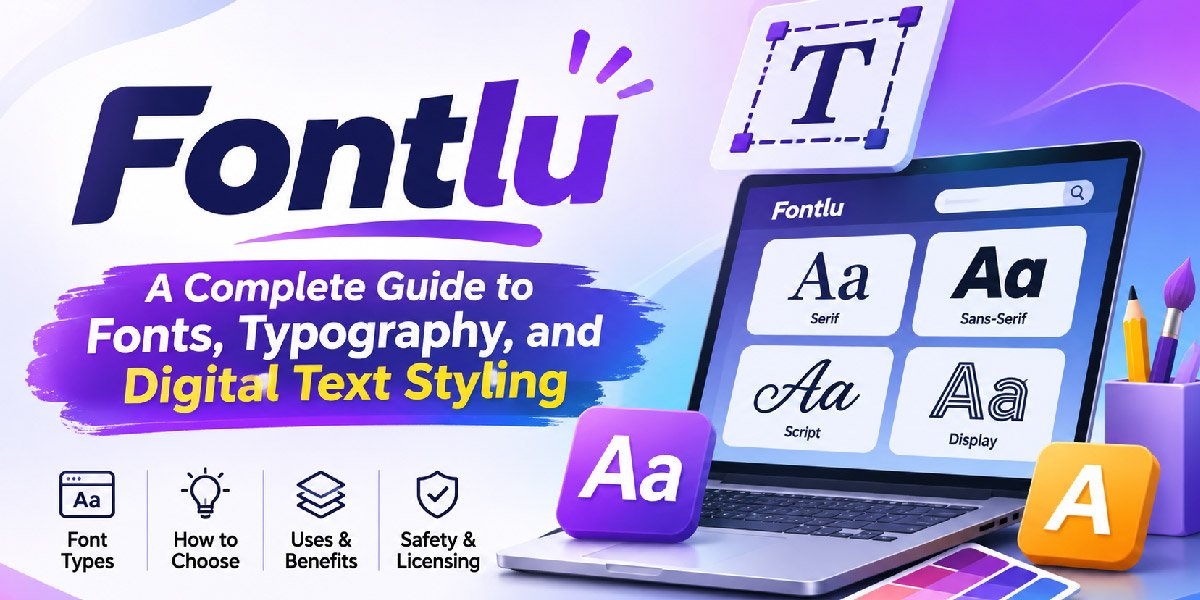
Fontlu is a term appearing in online discussions about fonts, typography, text styling, and digital design. People searching for Fontlu may expect a font tool, creative resource, font discovery platform, or simply an explanation of this unusual typography-related name.
However, Fontlu does not currently have one universally accepted meaning in professional typography. Different online pages describe it in different ways. This makes careful research important because users should not assume that every feature associated with the name belongs to one verified platform.
This guide explains Fontlu from a practical and factual perspective. You will learn what the term may represent, how online font tools normally work, how typography affects digital design, how to choose fonts, and what safety, licensing, accessibility, and compatibility issues matter.
What Is Fontlu?
Fontlu is best understood as an emerging name associated with fonts, typography, and digital creativity rather than an established technical typography term. Current online descriptions are inconsistent, and no single universally recognized definition explains exactly what every use of Fontlu represents.
Some sources connect Fontlu with font discovery, previews, text styling, and creative design. Others discuss it more broadly as a typography-related concept. Because these descriptions vary, specific features should not be presented as confirmed unless they can be checked on the actual service.
This distinction is especially useful for new users. Fontlu can introduce people to important subjects such as typefaces, readability, font pairing, website typography, and visual communication without requiring unsupported claims about AI tools, huge font libraries, or professional design functions.
What Does Fontlu Mean?
The first part of Fontlu clearly resembles the word “font,” which explains why searches for the term often lead toward typography and design discussions. A font contains a particular visual representation of characters used when displaying or producing written content digitally or physically.
The complete word Fontlu, however, does not have a widely recognized technical definition in typography. There is also no reliable reason to assign a special meaning to the “lu” ending without evidence from whoever created or registered the particular name being discussed.
Therefore, context matters more than the name itself. If you find Fontlu mentioned on a website, first determine whether that website is discussing fonts, providing a text preview, offering downloads, or simply publishing educational information about typography before assuming what Fontlu means.
Is Fontlu a Font Generator or Design Tool?
Calling Fontlu a confirmed advanced font generator would currently go beyond the available evidence. Recent search results give conflicting descriptions of the name, ranging from a font resource or preview service to an undefined typography concept, showing why specific functionality requires direct verification.
A normal font generator may let you type words and view them in several visual styles. Some tools simply preview installed or web-based typefaces. Others replace ordinary characters with special Unicode characters that users can copy and paste into supported applications.
These functions should not be confused with professional font creation. True font-editing software can involve designing individual glyphs, controlling spacing, adjusting kerning, creating character sets, and exporting usable font files. Fontlu should only be described as providing such functions when they are directly verified.
How Online Font Tools Usually Work
Most basic font tools start with a simple input box where users enter a name, heading, sentence, brand name, or other text. The tool then shows the entered content using available typefaces or transforms it into supported decorative character styles.
Users can compare these results and select a style that suits their project. Depending on the platform, options might include serif, sans-serif, script, display, handwritten, or monospace designs. Some tools also provide controls for size, weight, spacing, or other visual properties.
The final action depends on the service. Users may copy styled text, download a properly licensed font file, or simply note the typeface name for later use. These are general font-tool workflows and should not automatically be treated as confirmed Fontlu functions.
Why Typography Matters in Digital Design
Typography is much more than making words look attractive. It helps establish hierarchy, separates headings from supporting information, guides attention, and makes written material easier to understand. Poor typography can make valuable information uncomfortable or unnecessarily difficult to read.
Font choices also contribute to visual personality. A traditional serif typeface can create a different impression from a clean geometric sans-serif or expressive handwritten design. However, no font category automatically creates a specific emotion because context, layout, language, audience, and surrounding visuals also matter.
Good digital typography combines appearance with usability. Designers consider typeface choice, font size, weight, spacing, line length, contrast, and responsive behavior together. Accessibility guidance also emphasizes readable, understandable content rather than using visual decoration at the expense of comprehension.
Main Types of Fonts You Should Know
Serif fonts contain small finishing strokes on many letters and are commonly associated with books, publishing, editorial layouts, and traditional designs. Sans-serif fonts remove these finishing strokes and are widely used across websites, mobile applications, dashboards, and modern interfaces.
Script fonts imitate forms of handwriting or calligraphy and can add personality to invitations, logos, packaging, or short headings. Display fonts are generally created to attract attention at larger sizes, making them more suitable for posters, advertisements, titles, and branding than lengthy paragraphs.
Monospace fonts give characters equal horizontal space and remain common in programming and technical environments. Understanding these broad categories makes exploring Fontlu-related resources more useful because users can choose typography according to purpose instead of selecting whatever design looks most unusual.
How to Choose the Right Font
Start with the purpose of your content. A long blog article requires comfortable reading, while a logo or promotional poster can allow more visual experimentation. The audience, subject, medium, and amount of text should influence your choice before visual trends do.
Next, test fonts using real content instead of judging them from one attractive sample word. Check uppercase and lowercase letters, numbers, punctuation, headings, sentences, and paragraphs. If your project uses several languages, make sure the typeface contains all required characters and symbols.
Finally, test your choice at realistic sizes and on different screens. A stylish heading that looks excellent on a desktop monitor may become difficult to understand on a small smartphone. Readability should remain the priority whenever text carries important information for users.
Fontlu and Website Typography
Web typography has technical requirements beyond visual appearance. A developer can use web fonts so visitors receive the intended typeface even when that font is not installed locally. CSS also allows fallback font families when the preferred font cannot be displayed properly.
Performance matters as well. Loading many font files, styles, and weights can add unnecessary resources to a webpage. Developers can reduce this burden by using only the font files they actually need and choosing modern web formats such as WOFF2 where appropriate.
Website owners should therefore judge a font on more than appearance. Loading performance, readability, browser compatibility, language support, fallback behavior, accessibility, and licensing all deserve attention. Any Fontlu-related resource is most useful when it helps users make these practical decisions more confidently.
Fontlu for Social Media Text
Social media users often search for font generators because many platforms provide limited typography controls inside profile names, biographies, comments, or captions. Decorative text generators work around some restrictions by replacing standard letters with visually similar characters available within the Unicode standard.
This means copied “fancy fonts” are not always fonts in the traditional sense. A word that looks bold, outlined, mathematical, or script-like may actually contain different Unicode characters rather than normal letters being displayed through an installed typeface.
That difference can affect accessibility, searching, copying, editing, and compatibility. Decorative characters may display incorrectly on some systems or be interpreted poorly by assistive technology. For important information, normal text is usually preferable, while decorative styles are better kept limited and purposeful.
Fontlu for Bloggers and Content Creators
Bloggers need typography that helps readers move comfortably through titles, introductions, sections, captions, and long paragraphs. An impressive decorative font can attract attention in a heading, but the same design may become tiring when used throughout a long informational article.
Content creators should establish a simple visual system instead of changing fonts constantly. One well-designed family with different weights can sometimes handle an entire project. Another common approach uses one suitable font for headings and a complementary, highly readable font for body content.
Fontlu and similar typography resources can therefore be useful for inspiration and comparison, even when their available functionality differs. The important goal is not collecting the largest number of fonts. It is finding a small typography system that supports clear communication consistently.
Fontlu for Logos and Branding
Typography plays a major role in brand identity because business names often appear repeatedly across websites, packaging, advertisements, social profiles, documents, and physical materials. A suitable typeface should remain recognizable and practical across the different places where the brand appears.
A designer should test a potential brand font in several realistic situations. A logo that looks impressive on a large computer screen may lose important details when reduced to a mobile icon, product label, business card, social image, or small website header.
Licensing is equally important. Finding a font online does not automatically grant permission for every commercial application. Businesses should verify the licence covering logos, websites, advertising, applications, products, or client projects before adopting a typeface as part of a permanent identity.
Font Licensing and Commercial Use
Font files are creative works distributed under different licences. Some are available for broad personal and commercial use, while others allow only personal projects. Certain licences can impose separate conditions for websites, applications, electronic publications, logos, products, or other commercial uses.
Terms such as “free font” can therefore be misleading when taken without context. A free download does not necessarily provide unlimited commercial rights. Users should identify the actual licence, understand its permissions and restrictions, and keep relevant licence documentation for important professional projects.
This rule applies to Fontlu as much as any font website. Never assume every typeface found through one resource shares the same licence. Check the terms attached to the individual font and, when necessary, verify information with its designer, foundry, or authorized distributor.
Is Fontlu Safe to Use?
The word Fontlu by itself cannot establish whether a particular website is safe or unsafe. Because online sources do not present one consistently documented Fontlu identity, users should evaluate the exact domain or application they encounter rather than trusting the name alone.
Before downloading anything, check what file is being provided and why it is needed. Font resources normally should not require suspicious executable installers, unrelated browser extensions, or unnecessary permissions. Avoid entering sensitive personal or payment information into an unfamiliar service without verifying its identity.
Users should also review privacy information, contact details, terms, pricing, cancellation rules, and licensing conditions where relevant. These checks cannot guarantee that every service is trustworthy, but they provide a much stronger basis for making decisions than relying on an attractive interface alone.
Common Font Mistakes to Avoid
One common mistake is choosing appearance over readability. Highly decorative lettering can work for a short title yet fail completely in a long paragraph. Users should consider where the font will appear, how much text it must display, and who must read it.
Another problem is mixing too many unrelated fonts. Using several decorative families can weaken hierarchy and make a design feel inconsistent. A smaller font system usually creates stronger visual organization because readers quickly learn which styles represent headings, supporting text, labels, and body content.
Users should also avoid ignoring licensing, mobile testing, accessibility, and performance. Typography is successful when it serves the content instead of competing with it. A simple readable font used correctly can produce a more professional result than an unusual typeface used without clear purpose.
What to Check Before Using Fontlu
First, identify the exact Fontlu website, page, or service you are considering. Look at what is actually available instead of depending on third-party feature lists. Confirm whether it provides previews, downloadable files, copyable characters, educational resources, or another clearly demonstrated function.
Second, examine practical information surrounding the service. Check ownership details where available, privacy terms, licensing information, file formats, payment requirements, and support options. If a website promises premium functionality, make sure the feature can be independently understood before paying or creating an account.
Finally, test the output in the environment where you intend to use it. Check readability, compatibility, accessibility, and visual consistency. For downloaded typefaces, confirm that your intended use is permitted. Careful testing is more valuable than choosing a font simply because it looks fashionable.
Final Thoughts
Fontlu is an emerging typography-related name that currently lacks one universally accepted technical meaning or consistently documented product identity. It is therefore better to explain it carefully than to present uncertain claims about AI features, huge libraries, professional collaboration, or other functions as established facts.
The topic remains useful because it introduces important ideas about fonts and digital communication. Understanding serif, sans-serif, script, display, and monospace typefaces can help bloggers, designers, developers, students, marketers, and businesses make stronger choices for websites and creative projects.
Whatever Fontlu eventually represents, good typography follows dependable principles. Choose fonts that fit the purpose, keep important text readable, test designs across devices, protect accessibility, consider website performance, and verify licences. Attractive typography succeeds when it makes communication clearer rather than simply making text different.
(FAQs)
What is Fontlu?
Fontlu is an emerging online term associated with fonts, typography, text styling, and digital design. Available sources do not establish one universally recognized technical definition for it, so its exact meaning should be determined from the specific website or context where it appears.
Is Fontlu a font generator?
Fontlu is sometimes discussed alongside font generators and preview tools, but the name alone does not prove that every Fontlu-related service provides those functions. Users should check the actual platform before relying on claims about generation, downloads, customization, or professional design features.
Can I use Fontlu for social media?
If a Fontlu-related service provides Unicode-based decorative text, compatible results may potentially be used in supported social media fields. However, decorative Unicode characters can create readability and accessibility problems, so they should be tested carefully before being used in profiles or captions.
Is Fontlu safe?
Safety depends on the specific website or service using the Fontlu name. Check its identity, privacy information, download types, permissions, licensing terms, and payment conditions. Avoid installing unexpected executable files or providing sensitive information when a platform cannot be adequately verified.
Are fonts from Fontlu free for commercial use?
Commercial rights cannot be determined from the Fontlu name alone. Every downloadable typeface can have its own licence. Always check whether the licence permits commercial websites, logos, advertisements, products, applications, client work, or whichever professional use you have planned.
Does using different fonts improve SEO?
A special font does not automatically increase search rankings. Typography is more important for readability, accessibility, usability, and page presentation. Website owners should prioritize clear text and efficient font delivery instead of expecting decorative fonts or Unicode characters to provide a direct SEO advantage.







Discussion about this post