

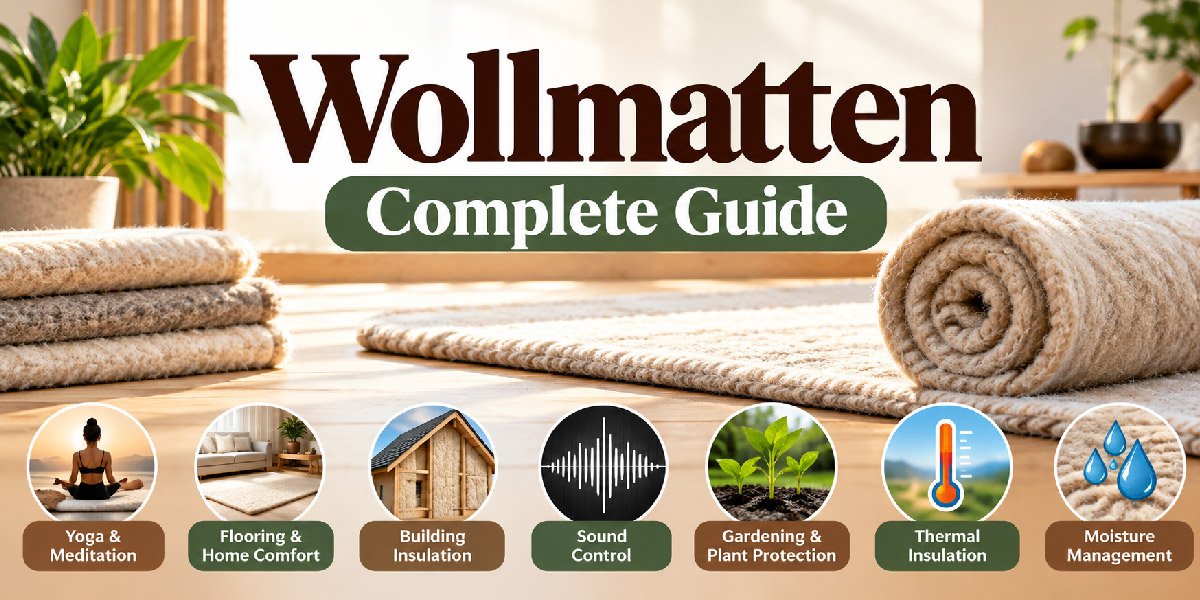
Wollmatten are wool-based mats made for different uses in homes, buildings, gardens, and wellness spaces. Depending on their design, they may provide warmth, cushioning, sound control, surface protection, or thermal insulation. Sheep wool is commonly used because its natural fibre structure can trap air and manage moisture.
The word does not describe one specific product. A Wollmatte can be a soft floor covering, a yoga mat, a dense felt pad, garden covering, or technical insulation material. Each type has a different construction and purpose.
This guide explains the meaning, materials, manufacturing, types, uses, benefits, limitations, sustainability, cleaning, lifespan, and important factors to consider when choosing Wollmatten.
Wollmatten at a Glance
Wollmatten are generally mats made completely or partly from wool. Sheep wool is the most common natural fibre, although some products combine it with cotton, polyester, latex, adhesives, backing materials, or other fibres. Their exact construction depends on their intended use.
Wool has a naturally crimped structure. These small waves create spaces that hold air, helping wool provide warmth and insulation. Wool can also interact with moisture vapour and absorb some sound, making it useful for several indoor applications.
Wollmatten are available in many forms. Some are designed mainly for comfort and appearance, while others have technical purposes. Checking the material composition and intended application is therefore important before choosing a product.
What Does Wollmatten Mean?
Wollmatten is a German word. “Wolle” means wool, while “Matten” means mats. The singular form is “Wollmatte,” meaning a wool mat. The term describes a category of products rather than a particular company, technology, or brand.
Its broad meaning explains why different products appear when people search for Wollmatten. One seller may use the term for a yoga mat, while another may use it for sheep-wool building insulation, felt material, floor coverings, or gardening products.
The intended use therefore matters more than the name alone. Buyers should read the complete product description to understand what a particular Wollmatte is designed to do and whether it has the right properties for their needs.
What Are Wollmatten Made From?
The main material in Wollmatten is usually sheep wool. Depending on the product, manufacturers may use virgin wool, recycled wool, Merino wool, felted wool, or other grades of sheep fibre. The type and quality of wool influence softness, density, durability, and overall performance.
Not every Wollmatte is made entirely from wool. Floor and yoga mats may include latex or textile backing for better stability. Other products can contain synthetic fibres, adhesives, dyes, binders, resins, or protective treatments designed for a particular application.
This distinction matters when choosing a natural or biodegradable product. A mat can have a pure wool surface while still containing synthetic materials underneath. Buyers should therefore check the full fibre content, backing, treatments, and construction.
How Are Wollmatten Made?
Manufacturing methods vary according to the intended purpose. Wool is normally cleaned before its fibres are prepared and arranged. The fibres can then be felted, needle-punched, woven, tufted, or processed using another method suitable for the finished product.
Felting creates a dense material by binding wool fibres together. Needle punching repeatedly pushes specialised needles through loose fibres so they become mechanically connected. These methods are commonly used for felt pads, technical mats, insulation, and some gardening products.
Decorative floor mats may instead be woven or tufted to create a softer surface and a particular appearance. Manufacturers may then add edges, backing, latex, or protective treatments. These additional materials can influence durability, grip, cleaning requirements, and recyclability.
How Do Wollmatten Work?
Wool fibres naturally have a wavy structure known as crimp. This structure creates many small spaces between the fibres where air can become trapped. Since still air transfers heat relatively slowly, these spaces contribute to wool’s useful insulating properties.
Wool can also absorb moisture vapour from its surroundings and later release it as conditions change. This behaviour can help the material remain comfortable under normal indoor conditions. However, moisture management does not mean that wool is waterproof or suitable for constant exposure to water.
Its dense, irregular fibre structure can also absorb some sound energy. The combination of insulation, moisture management, softness, elasticity, and acoustic absorption explains why Wollmatten can serve many purposes instead of being limited to ordinary floor coverings.
Main Types of Wollmatten
Wollmatten come in several forms. Decorative floor mats and rugs provide softness and warmth over hard surfaces. Felted versions can protect furniture, tables, shelves, equipment, and other surfaces while providing light cushioning between hard objects.
Technical Wollmatten include building insulation and acoustic products. Insulation mats are designed to reduce heat transfer in suitable walls, roofs, ceilings, and floors. Acoustic wool products are designed to absorb sound and may help control unwanted reflections or echoes.
Other varieties include garden wool mats used around plants and wellness mats designed for yoga or meditation. These products should not be treated as interchangeable. A decorative mat, for example, should never be assumed to meet building insulation or fire-performance requirements.
Wollmatten for Yoga and Meditation
Wool mats are particularly suited to slower practices where comfort and warmth matter. They can provide a soft surface for meditation, Yin Yoga, restorative yoga, Yoga Nidra, breathwork, relaxation, and other activities involving long periods of sitting or lying down.
The wool layer provides insulation between the body and a cold floor. Its cushioning may also make contact points such as the knees, hips, elbows, shoulders, and back feel more comfortable during quiet practices. Some yoga Wollmatten include a non-slip backing for additional floor stability.
They are less suited to every exercise style. Fast yoga, hot yoga, or sweaty practices usually require dependable hand and foot traction. A plush wool surface may provide less grip than a purpose-built rubber or synthetic yoga mat.
Wollmatten for Flooring and Home Comfort
Floor Wollmatten can bring warmth and softness to bedrooms, living rooms, home offices, reading areas, and other indoor spaces. They create a textile layer between the user and hard surfaces such as wood, stone, concrete, or tile.
Wool can also contribute to a quieter room. Hard surfaces reflect sound easily, while a dense textile surface can absorb part of that sound. A wool floor mat may therefore reduce some footstep noise and make rooms with many hard surfaces feel less acoustically harsh.
Size, density, thickness, and construction should match the location. High-traffic areas generally need durable products, while thicker and softer mats may work well in low-traffic relaxation areas. A non-slip underlay may also be needed on smooth flooring.
Wollmatten as Building Insulation
Specially manufactured sheep-wool mats can be used as building insulation. Depending on the approved product and building design, they may be installed in walls, roofs, ceilings, floors, loft spaces, and timber-frame structures to help reduce unwanted heat transfer.
Their flexible structure can make some wool insulation products easier to fit around irregular spaces than rigid boards. However, effective insulation depends on much more than the fibre itself. Correct thickness, density, installation, moisture management, and the overall building assembly all influence performance.
Building-grade Wollmatten should not be confused with ordinary wool rugs. Technical insulation products need appropriate performance data and must comply with applicable construction and fire requirements. Buyers should check thermal specifications, installation guidance, pest treatment, and fire information before use.
Wollmatten for Sound and Acoustic Control
Wool’s fibrous structure can absorb some sound energy rather than reflecting all of it back into a room. For this reason, suitable wool-based products may be used in offices, studios, meeting spaces, home cinemas, and other rooms where acoustic comfort is important.
The effectiveness depends on the product’s thickness, density, placement, and construction. A thin decorative mat can soften some room reflections, while a purpose-designed acoustic product may provide more meaningful absorption across specified sound frequencies.
Sound absorption should not be confused with complete soundproofing. Reducing echo inside a room is different from preventing sound from passing through a wall or ceiling. People who need technical acoustic control should therefore choose products with relevant test information instead of relying only on wool content.
Wollmatten for Gardening and Plant Protection
Some Wollmatten are designed specifically for gardening. These wool mats are placed around plants, shrubs, trees, or garden beds to cover the soil. By blocking some sunlight from reaching the ground, they may help limit the growth of unwanted plants beneath the covering.
A wool layer can also reduce direct exposure of the soil surface to sun and wind. This may help slow moisture loss under suitable conditions. Natural wool will eventually break down, making wool-based garden mats attractive to gardeners looking for alternatives to long-lasting plastic ground covers.
However, not every Wollmatte belongs in a garden. Buyers should confirm that the product is intended for soil use and check for synthetic fibres, backing, adhesives, dyes, or treatments before allowing it to decompose around plants.
Thermal Insulation and Temperature Control
One of wool’s most useful characteristics is its ability to trap air between crimped fibres. This trapped air helps slow heat movement. In floor mats, the effect can make a cold hard surface feel more comfortable, particularly when sitting, lying, or walking barefoot.
Building-grade wool insulation uses the same basic principle at a larger scale. Correctly selected and installed insulation can reduce heat movement through parts of the building envelope, supporting more stable indoor temperatures and reducing unwanted heat loss or gain.
Performance varies significantly between products. A thick insulation batt and a thin decorative Wollmatte cannot provide the same thermal performance. Density, thickness, construction, installation quality, climate, and surrounding building materials all affect the final result, so technical applications require product-specific data.
Moisture Management and Breathability
Wool is hygroscopic, meaning it can interact with water vapour in the surrounding air. It can take up moisture vapour and release it again as environmental conditions change. This property contributes to wool’s reputation as a breathable and comfortable natural fibre.
This characteristic can be useful in flooring, clothing, wellness products, and correctly designed insulation systems. However, claims about moisture regulation should not be confused with waterproofing. Liquid water and prolonged dampness create very different conditions from normal changes in airborne humidity.
A soaked Wollmatte may take considerable time to dry and can develop unwanted smells, staining, deformation, or other damage. Building insulation also requires appropriate moisture design. Ventilation, drainage, vapour control, and construction details remain important even when wool insulation is used.
Benefits of Wollmatten
The main benefits of Wollmatten come from wool’s natural fibre structure. Wool provides softness and cushioning while trapping air that can contribute to warmth. Its ability to interact with moisture vapour and absorb some sound makes it useful across several household and technical applications.
Wool is also naturally elastic. Quality fibres can recover after normal compression, which can help well-made products maintain their structure. Sheep also grow new fleece, making wool a renewable raw material when compared with materials produced entirely from finite fossil resources.
These benefits vary according to construction. A garden mat, yoga mat, floor rug, and insulation product are designed differently and should be judged according to their intended purpose. Wool content alone does not guarantee durability, grip, acoustic performance, or technical insulation quality.
Drawbacks and Limitations of Wollmatten
Wool products can cost more than basic synthetic alternatives, particularly when high-quality fibres or specialised manufacturing methods are used. They may also require gentler maintenance because excessive heat, aggressive chemicals, rough washing, or prolonged soaking can damage some wool products.
Some new mats may shed loose fibres, while untreated wool can be vulnerable to textile pests such as clothes moth larvae. Manufacturers may use protective treatments in products where pest resistance is important. This means natural wool products should not automatically be described as untreated or chemical-free.
Wool is also not waterproof, completely stain-proof, mold-proof, or fireproof. Performance depends on the finished product. Buyers should consider these limitations alongside the benefits and select Wollmatten according to their actual environment and intended use.
Are Wollmatten Sustainable?
Wool is renewable because sheep naturally grow fleece again after shearing. Pure wool can also biodegrade under suitable environmental conditions. These characteristics can make wool attractive to people who want to reduce their reliance on some petroleum-based synthetic materials.
However, the environmental impact of Wollmatten cannot be judged from the fibre alone. Sheep farming, land management, processing, transportation, dyes, washing, manufacturing energy, chemical treatments, backing materials, product lifespan, and disposal all contribute to the complete environmental footprint.
A finished mat containing plastic backing, synthetic fibres, or adhesives may not biodegrade like untreated wool. Buyers interested in sustainability should examine material composition, durability, sourcing information, manufacturing practices, and credible certifications rather than assuming every wool product has the same environmental profile.
Wollmatten vs Synthetic Mats
Wollmatten and synthetic mats have different practical strengths. Wool generally offers natural warmth, a soft surface, moisture-vapour management, and useful sound absorption. Depending on construction, it can be an attractive option for bedrooms, relaxation areas, meditation, and other comfort-focused spaces.
Synthetic mats are often less expensive and may be easier to clean. Materials designed for wet conditions can also provide better water resistance. Exercise mats made from rubber or specialised synthetic materials may offer stronger grip than a soft wool surface during fast or sweaty movement.
The better option therefore depends on use rather than material reputation alone. Wool may suit users prioritising warmth and natural fibre comfort, while synthetic materials may be more practical where frequent washing, water resistance, low cost, or strong exercise grip is required.
How to Choose the Right Wollmatte
Begin with the intended purpose. A yoga mat, decorative floor covering, garden mat, acoustic product, and building insulation mat require different construction and performance characteristics. Choosing by appearance alone can result in a product that does not perform the required job.
Check the complete material composition rather than only the front surface. Consider wool percentage, thickness, density, size, weight, backing, pile height, edge construction, treatments, and cleaning instructions. For yoga or flooring, stability and grip may also be important considerations.
Technical applications require additional care. Insulation and acoustic Wollmatten should have suitable performance information for their intended use. Fire behaviour, thermal properties, acoustic data, pest protection, installation instructions, and relevant building requirements should be checked before purchasing or installing technical products.
How to Clean and Care for Wollmatten
Cleaning instructions vary because Wollmatten are made in many different ways. For ordinary floor mats, gentle vacuuming can remove dust and loose dirt before it becomes deeply embedded. The manufacturer’s care label should always take priority over general cleaning advice.
Spills should normally be dealt with quickly. Blotting with a clean absorbent cloth is generally safer than aggressive rubbing, which can spread the liquid and disturb fibres. Strong chemicals, bleach, high heat, or excessive water should be avoided unless specifically permitted by the manufacturer.
A damp mat should be allowed to dry properly before storage. Floor mats can also be rotated occasionally to distribute wear and sunlight exposure. Large, handmade, valuable, or heavily stained wool products may require specialist cleaning to avoid shrinking, colour changes, or backing damage.
How Long Do Wollmatten Last?
There is no single lifespan for Wollmatten because products vary greatly in quality and purpose. A dense, well-constructed wool floor mat used in suitable conditions may remain useful for many years, while a biodegradable garden mat is intentionally designed for a much shorter service life.
Traffic, moisture, sunlight, cleaning methods, storage, fibre quality, density, backing, and construction all influence durability. Repeated soaking, harsh chemicals, pest damage, or inappropriate washing can shorten the life of a wool product even when the original material is high quality.
Proper use is equally important. A product designed for light indoor use may wear quickly in a demanding environment. Following the manufacturer’s cleaning, installation, storage, and maintenance guidance gives a Wollmatte the best chance of reaching its intended service life.
Are Wollmatten Worth It?
Wollmatten can provide good value when their natural characteristics match the intended application. People seeking warmth, softness, cushioning, moisture-vapour management, or a wool-based material may find them particularly useful for flooring, meditation, slow yoga, and other comfort-focused uses.
Technical wool mats can also be valuable for insulation, acoustic control, gardening, or surface protection when they are specifically manufactured and tested for those jobs. Their higher initial price may be reasonable when construction quality, durability, performance, and maintenance requirements match the buyer’s priorities.
They are not automatically the best option in every situation. Synthetic materials can sometimes provide lower prices, easier washing, greater water resistance, or specialised grip. The sensible choice comes from comparing purpose, materials, performance, lifespan, maintenance, and total cost.
Final Thoughts
Wollmatten is a broad term covering mats made completely or partly from wool. Depending on their construction, these products can serve as floor coverings, yoga and meditation surfaces, building insulation, acoustic materials, garden covers, felt pads, and protective layers.
Their useful properties largely come from wool’s natural fibre structure. Crimped fibres trap air, provide cushioning, interact with moisture vapour, and can absorb some sound. At the same time, wool requires appropriate care and should not automatically be considered waterproof, maintenance-free, or suitable for every technical application.
The most important step is choosing a Wollmatte designed for the required job. Check its materials, construction, dimensions, backing, care requirements, technical specifications, and intended use before buying.
(FAQs)
What are Wollmatten?
Wollmatten are mats made fully or partly from wool, usually sheep wool. Depending on their design, they can be used for flooring, yoga, meditation, building insulation, sound control, gardening, or surface protection.
What are Wollmatten made from?
Most Wollmatten use sheep wool as their main material. Some products also contain synthetic fibres, natural latex, cotton, adhesives, dyes, backing materials, or protective treatments. The exact composition varies according to the mat’s purpose.
Are Wollmatten good for yoga and meditation?
Yes, wool mats can work well for meditation, Yin Yoga, restorative yoga, and Yoga Nidra because they provide warmth and cushioning. However, soft wool surfaces may offer less grip for fast or sweaty yoga practices.
Can Wollmatten be used for insulation?
Special building-grade Wollmatten can be used as thermal and acoustic insulation in suitable walls, roofs, floors, and ceilings. Decorative wool mats should not be used as insulation because technical products require specific performance and safety standards.
Are Wollmatten waterproof?
No, Wollmatten are not generally waterproof. Wool can manage moisture vapour and absorb some moisture, but prolonged exposure to liquid water can cause problems. Wet wool mats should be dried properly according to the manufacturer’s care instructions.
How do you clean Wollmatten?
Cleaning depends on the product. Many wool floor mats can be gently vacuumed, while spills should be blotted rather than rubbed. Avoid harsh chemicals, excessive water, and high temperatures unless the manufacturer specifically allows these cleaning methods.
How long do Wollmatten last?
The lifespan of Wollmatten depends on wool quality, construction, use, cleaning, moisture exposure, and storage. A well-made indoor wool mat can remain useful for years when it receives appropriate care and is used as intended.
you may also read: MMSBRE Explained: Meaning, Uses, Benefits and How It Works








Discussion about this post